Говорим о True Bypass
Что же такоеTrue Bypass? Собственно, это такой метод переключения в педали, при котором, в выключенном состоянии, сигнал идет напрямую с входа на выход, минуя саму схему примочки.
Резонный вопрос, а зачем оно надо?
А надо оно затем, чтобы донести сигнал от звукоснимателей до усилителя с минимальными искажениями, а лучше, вообще, без оных. Но, такого, к сожалению не бывает.
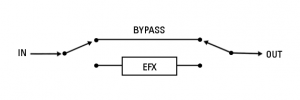
Ну, или более подробно.
На этой схеме синим, показан путь сигнала, а красным – внутренние контакты в переключателе. Точки же, означают, что внутренние контакты переключаются строго вместе при нажатии кнопки.
Видно, что сигнал идет с входного джека, на среднее контактное ушко, через внутренний контакт на нижнее, затем на соединительный провод (jumper), опять через внутренний контакт, и на выход.
В этой схеме применяется переключатель DPDT (Double Pole Double Throw), так же возможно применение переключателя 3PDT (Triple Pole Double Throw), в этом случает случае можно задействовать светодиод, который будет включаться при переходе в байпасс и наоборот.
Ниже приведена схема True Bypass Looper (про луперы я уже писал не путать с looper/sampler), как раз с использованием 3PDT для светодиода.
Естественно, что можно обойтись DPDT (и без светодиода).
Не трудно заметить, что Рис. 4 практически совпадает с Рис. 2.
Теперь посмотрим на НЕ True Bypass.
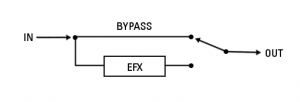
Или более подробно.
В этом случае, цепь эффекта, которая имеет свое сопротивление, всегда соединена с путем сигнала. В таких схемах применяют более дешевые переключатели SPDT. Вообще, такая схема не теоретически это не должна сильно влиять на звук.
Однако попробуйте включить в цепь, например, Dunlop CryBaby Original, и послушать чистый звук. Гарантирую, разницу между тем, когда квакушка и в цепи и не в цепи, вы услышите. Именно поэтому свою квакушку я замодил и теперь в ней самый, что ни на есть True Bypass. (Есть еще вариант использовать True Bypass Wah-Pad)
Такая схема переключения часто встречается в винтажных эффектах и переизданиях оных. Dunlop (как и другие производители), например, специально на многих своих примочках оставляет такую схему включения. Это, своего рода, фишка педали, которая окрашивает звук гитары. Ну, и потом, если это переиздание винтажной педали, то тоже стараются сохранять аутентичность.
Еще один важный момент, при такой схеме переключения звук будет всегда, независимо от того, включена педаль в данный момент или нет, есть ли на педали питания или нет, вставлена ли туда батарейка или нет. Кстати, именно так люди не совсем в теме проверяют, есть ли у педали True Bypass или нет. Т.е, если сигнал проходит через незапитанную педаль, то говорят, что она с True Bypass. Так вот, это не правильно!
Как мы выяснили выше, как в случае True Bypass, так и в случае Not True Bypass сигнал проходит в любом случае.
Что насчет буфера?
Однако же, есть случай, когда, если педаль не запитана, звук проходить не будет. И вот это-то люди не в теме и называют НЕ True Bypass.
Да, байпасс тут не правильный, но плохо ли это? И почему, в отличие от предыдущих случаев сигнал не проходит, если вынуть из педали батарейку?
Как вы уже догадались, речь идет про педали с буфером.
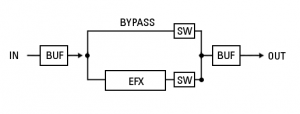
В этом случае, сигнал всегда идет через цепи педали, однако для предотвращения потерь сигнала он проходит через буферы, которые превращают сигнал из высокомного в низкоомный.
Повторюсь, основная идея использования буффера, это предотвратить потери сигнала со звукоснимателей (которые представляют собой высокомную и низкоемкостную нагрузку). Выход буфера, обычно, низкоомный, что позволяет без потерь качества подключать к нему длинные гитарные кабели, либо цепь примочек.
Кстати, дополнительный бонус такого способа – это отсутствие щелчка при переключении, который зачастую возникает при использовании механических переключателей (здесь же переключение электронное).
Казалось бы, что все должно быть круто. Ан нет, и тут не без подводных камней.
Буфер должен быть качественный, чтобы не вносить искажений в сигнал (Visual Sound говорят, что в их педалях такие). Простой и дешевый транзисторный буфер (как в некоторых Boss или Ibanez), может шуметь и искажать сигнал, а если в цепи несколько педалей с такими буферами, то фонить уже может довольно сильно.
В заключении
Буффер может быть хорошим решением, если у вас большая цепь педалей или длинные кабели, однако, могут быть проблемы при подключении педалей разных производителей, особенно, если есть винтажные педали без True Bypass. Если использовать все педали с буфером, то это может решить одну проблему, однако вызвать другую в виде фона. Последнего можно избежать, если иметь в каждой педали высококачественный буффер, что, как сами понимаете, на практике невозможно.
Что можно посоветовать? Покупайте True Bypass, когда это можно и используйте хорошие кабели и джеки. Можно использовать специальные качественные буферы перед цепью эффектов, как напримерMC401 Boost/Line Driver и ему подобные. Не забывайте так же, и про луперы и лайн селекторы.
Комбинируя все эти способы, можно передачи сигнала от звукоснимателей до усилителя без потерь, как если бы вы включили напрямую гитару в усилитель.
Да, и не замарачивайтесь сильно на этом, используйте свой слух. Если разницы не слышно, то зачем запариваться? Зачастую, усилия могут не соответствовать произведенному эффекту, от этих усилий.
PS: Если есть дополнения, исправления. Или вы заметили неточность, то давайте в камменты — обсудим. С вопросами тоже туда =)
How to Know if a Guitar Pedal Is Buffered or True Bypass?
The concept of “True Bypass” is not an old one, compared to the buffered pedals that have existed since stompboxes were created.
For the most part, players have sworn by this technology as a means of preventing tone loss from your signal chain.
But, does that mean that buffered pedals no longer have a place?
Or do they offer something that can help?
Buffered pedals and true bypass pedals both have their pros and cons, and there are a few quick things you can do to identify either type, either by their switches, or how they handle your signal when power is cut. Both also play an important part in your signal chain and can be used strategically to ensure you have the best signal possible
So, let’s get right down to it!
Table of Contents
What’s the difference between a true bypass and a buffered pedal?
The major difference lies in the circuitry.
Buffered pedals contain chips that contain tiny amplifiers that boost your signal slightly.
This allows your signal to remain strong and prevent high-end loss while going through long cable runs.
These pedals are also “always on” in the sense that your guitar signal is going through the circuits, even when the pedal is off, affecting your sound.
However, because the signal isn’t cut out of your chain, certain reverb and delay pedals will spill over when they’re switched off, finishing off the effect rather than stopping abruptly.
True bypass pedals remove the pedal’s circuit from your signal chain when they’re off.
This essentially means that when the pedal is on, your signal goes through the effect, and when it’s off, it’s like the pedal isn’t there.
Many players enjoy true bypass as a means of preserving their guitar’s original tone when not using effects.
Also, when a true bypass pedal is switched off, the effect immediately cuts off, including delay and reverb trails.
Are true bypass pedals better?
The answer depends on your setup.
Some people do find true bypass better since it eliminates the circuit from your signal when not in use.
The other advantage to true bypass pedals is that if you have a power failure to that pedal, your signal will still go to your amp with the pedal off thanks to the direct connection.
The problem with true bypass is that while it does remove the circuit, you’re still adding some capacitance to your chain by stringing these pedals together (almost akin to using a longer cord).
In short, you are still adding distance between your guitar and your amp. Your signal will still get a bit weaker, affecting your overall tone.
Are all tuner pedals buffered?
It depends on the pedal. Some are, some are not, and some give you the option.
Take the Boss TU-3 (a very popular pedal tuner).
That pedal, like most – if not all – Boss pedals have very good buffers built into them.
Like most tuners, they work best when it’s one of the first pedals in your chain. Just be aware that because it is buffered, it may cause problems with “early-chain” pedals (such as old fuzz pedals) that don’t take too kindly to them.
For true bypass, there is the TC Electronic Polytune.
The early models of these pedals do have true bypass switching in them.
This eliminates the tune from the signal when it’s turned off, and the lack of buffer makes it more “fuzz” friendly (if you will).
Now, the more recent versions of the Polytune feature a Bonafide Buffer circuit integrated into the pedal (the Bonafide Buffer is a switchless, “always on” device that you added to your signal chain where you needed a buffer).
This feature allows you to add a buffer to the tuner if needed. However, if you turn on the tuner, your signal will constantly run through the circuit, taking away the true bypass feature.
How to know if a pedal is buffered or true bypass?
The easiest way to know if your pedal is a true bypass one or not is to plug it into your signal chain, then unplug the power to the pedal.
If your signal still goes through, then you have a true bypass pedal.
Another way to know is if your pedal has a 3PDT switch, which usually is solid and produces a loud click.
That may be an indication, but is not always reliable (TC uses soft-touch switches in their pedals, whether true bypass or not).
Most builders such as Boss, Ibanez, and Maxon, make pedals with quality buffers.
However unplugging the power to these pedals while in use will mean your signal will get cut off, whether the pedal is on or off.
Should you worry about what type your pedal is?
If you’re using just a few pedals in your setup, there is less need to worry about the type of pedal that you’re using.
If you’re creating a big, elaborate pedalboard, you may want to plan to balance the use of buffers (whether they’re in pedals or standalone devices) with true bypass pedals.
Because of the added distance, you’re putting between guitar and amp, a buffered pedal here or there (particularly at the start and end of your signal chain) will make sure you have a strong signal throughout.
Hello there, my name is Ramiro and I’ve been playing guitar for almost 20 years. I’m obsessed with everything gear-related and I thought it might be worth sharing it. From guitars, pedals, amps, and synths to studio gear and production tips, I hope you find what I post here useful, and I’ll try my best to keep it entertaining also.
Related posts:
Who's the gear aficionado?
Hello there, my name is Ramiro and I’ve been playing guitar for almost 20 years. I’m obsessed with everything gear-related and I thought it might be worth sharing it. From guitars, pedals, amps, and synths to studio gear and production tips, I hope you find what I post here useful, and I’ll try my best to keep it entertaining also.
GearAficionado is a participant in the Amazon Services LLC Associates Program, and the Sweetwater.com Affiliate Program, two affiliate advertising programs designed to provide a way for websites to earn revenues by advertising and linking to Amazon.com and Sweetwater.com. At no extra cost to you, any purchases you make through any of these links will earn me a commission.
Must read
- Musician Jobs: 7 Reasons Why AI Is Not a Threat
- Headrush vs Helix vs Kemper vs GT1000 vs AX8: Which is best?
- Squier Lines Explained: Which Is Best for You? Differences
- PRS SE vs S2 vs CE vs Core lines [Main differences]
- Les Paul: Solid vs Chambered vs Weight Relieved
GearAficionado ©
111 NE 1st St, Miami, FL, Miami-Dade, US, 33132
Phone: +1 786-755-8158
Understanding True Bypass Pedals and Buffers
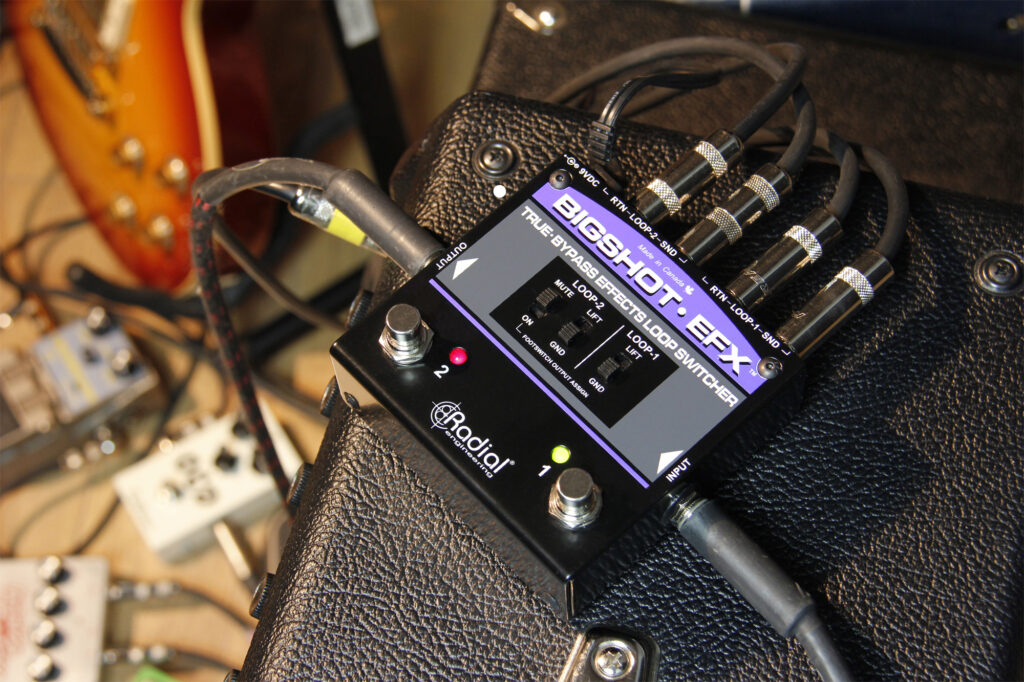
True bypass, often referred to when discussing effects pedals, can be thought of as a straight wire connected from the input to the output of a pedal. With a true bypass pedal, when the pedal is in bypass mode (off), the guitar signal is routed directly to the guitar amplifier without any of the interference, loading, or buffering effects that are often caused by the pedals that are in-between.
The easy way to check if a pedal is true bypass is to disconnect the power and see if the guitar signal passes through the pedal when the effect is off. Make sure you toggle the on/off footswitch so that it is set to off or bypass.
The concept is simple: true bypass pedals connect the instrument directly to the amp bypassing the effects’ circuits so the original tone of the instrument is retained and you enjoy better feel. The question therefore arises: if true bypass pedals are better, why aren’t all pedals true bypass? Well, the answer is complex and is often a trade-off.
Most pedals are NOT true bypass because in theory, true bypass pedals are great but in practice they often introduce problems of their own. For instance, true bypass pedals are notorious for switching noise. This is most audible when playing with high gain or distorted amp tones.
With pedals like a chorus, delay, or reverb, the input buffer is the circuitry that is needed to drive the signal into the effect chip that makes it work. A buffer is in fact a preamplifier. Buffers are used EVERYWHERE in audio where a signal is driven with a power source. The battery-powered built-in preamp in your acoustic guitar is a buffer. Your active bass is driven with a buffer. The input to your mixer or audio interface is buffered. And all effects pedals from wahs to fuzzes employ buffers to make them work. Turning these pedals on or off usually introduces a popping transient when the circuit is charged that can be very loud. So the way around the problem is to never turn the buffer off. Pedals like these are buffered and therefore not true bypass.
Buffers have several advantages: You can drive longer cables with less noise, have a tuner connected with less interaction, and loading no longer becomes a problem as you gang a bunch of pedals together. So clearly, buffers are great, right? No, not necessarily. Buffers introduce another problem: you no longer are connected to your amp. Your signal is now active or buffered and invariably the buffer alters the tone of your guitar! The quality of the buffer becomes a major issue.
So what is the solution?
It comes down to making choices. If you are a tone nut and want true bypass performance as if you are connected directly to your amp, then you need to make sure all of the pedals you are using are true bypass. Be prepared to live with some switching noise. When you connect devices like a tuner to the circuit, the tuner will immediately load down your pickup and thin out the tone. And of course, forget about using a chorus or reverb in-line as these will almost certainly be buffered and not true bypass.
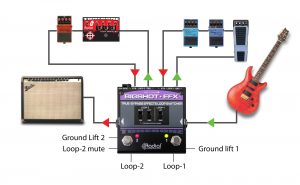
A good option would be to connect an effects loop selector like the BigShot EFX® to your pedalboard. This simple device lets you connect a bunch of pedals in two separate loops and bring them into your guitar signal path when you need them. This way, tone-robbing pedals–or those old vintage devices that sound great but are noisy—can be used only when needed, then completely taken out of the circuit to remove any negative side effects.
True Bypass or Buffered Bypass, that is the question!
When a true bypass pedal is in bypass mode, the signal will go directly from the pedal’s input to its output without passing through the pedal’s effect circuitry or connecting to any other circuitry within the pedal. When a buffered bypass pedal is in bypass mode, the signal is still going through the pedal’s buffer. The buffer conditions the signal to prevent loss and tone change.
It’s all about the signal path. When you plug your guitar directly into your amp the only thing between the two is a cable. The length and quality of that cable will affect your overall sound. The farther your signal has to travel, the more your signal will degrade. It’s usually most apparent in the loss of high frequencies. That’s capacitance at work. The more pedals you have in your effects chain, the more cable you need to connect them.
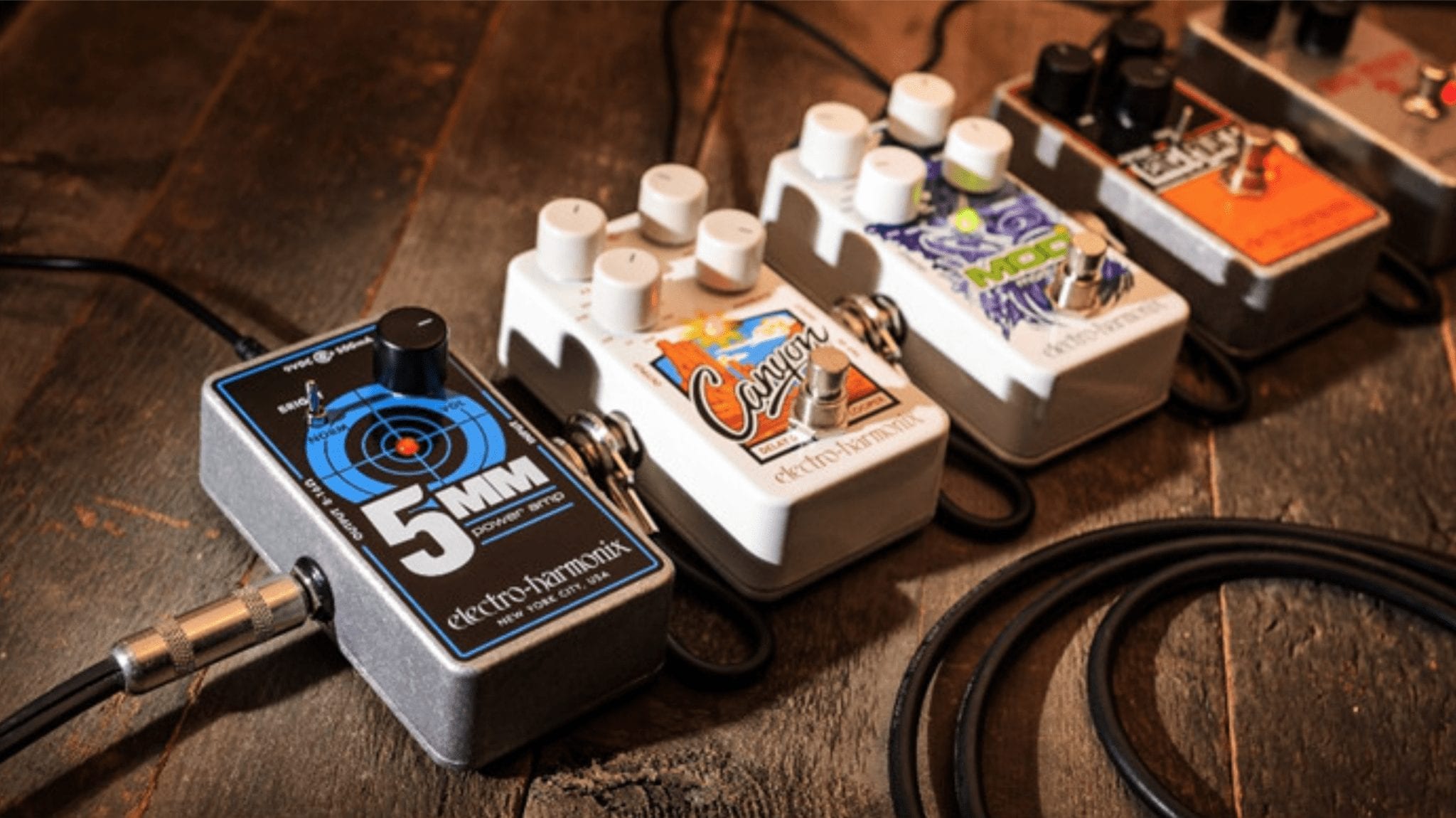
With true bypass your signal is passing directly through-without the pedals doing anything to boost, enhance or load down the signal. If you’re a player that only uses a couple of pedals and you are using a relatively short cable, say less than 18.5 feet, true bypass is a great way to go.
However, if your pedalboard is packed with pedals and you are using a long cable, buffered bypass can have certain advantages. With buffered bypass, the buffer is always acting on your signal, even when the pedal is off. This strengthens and conditions it, restoring your signal and tone. Of course, all buffered circuitry is not created equal and the quality of the circuit design and componentry are extremely important. That said, even the best buffers add some noise to your signal, they always require power and limit the headroom of your bypass signal. Here at EHX our engineers take great pains in all aspects of our pedal designs, including whether to include buffered or true bypass, and the design of the former.
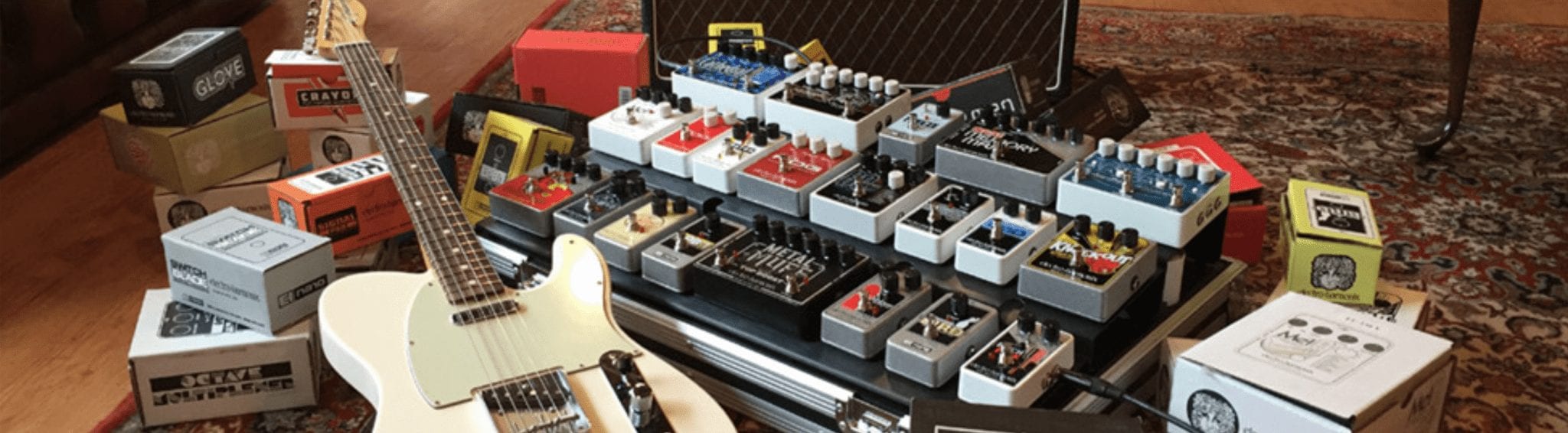
True bypass and buffered bypass pedals can and do happily co-exist in the same setup. Ultimately, rely on your ears and the way your rig “feels” as the final arbiter. Pedals should enhance your creativity and we all don’t see and hear things the same. So… experiment and find out what works best for you.