Oxygen Absorbers: What You Need to Know
Have you ever used oxygen absorbers at home, or are they just the thing you chuck from the bottom of the beef jerky bag? There seems to be some confusion about the point of oxygen absorbers, whether you need to use them, or under what circumstances. But your friendly kitchen self-sufficiency expert is going to help you out <waving—that’s me!>.
What is an Oxygen Absorber?
Don’t get confused between terminology. First, what an oxygen absorber is not: a desiccant is something that absorbs moisture. There are several types of desiccants (nearly all made from Silica, a naturally occurring agent that is usually non-toxic)—some I want nowhere near my food and some I don’t mind. Maybe we’ll talk about that another day. I don’t personally use desiccants in food preservation, choosing instead to use time-tested preservation techniques like keeping food well-sealed in a climate controlled area.
Oxygen Absorbers (sometimes called an “oxygen scavenger”), in contrast, suck up all of the loose air in the sealed container. It combats the most common of all food storage enemies (your others being light, extreme temperature, and vermin—eeewww).
Why should you use Oxygen Absorbers?
Oxygen absorbers extend shelf life, prevent rancidity, delay oxidization, and even helps to preserve the best flavor.
Most people who lose food storage lose it to oxygen. Sometimes a jar lid didn’t seal, and sometimes the mylar bag or vacuum sealed bag gets a tiny little leak. I’ve discovered this stuff in both long and short term food storage. Sometimes it’s user error during processing, and other times it is just the effects of other conditions (like temperature fluctuation in your storage, or jostling the food around).
An oxygen absorber isn’t a permanent fix in situations where you have faulty packaging, but they can buy you time. Do you check your food storage routinely? Do you rotate it so that you are using oldest food first, and are you routinely using your food storage in your daily cooking? All of this prevents loss.
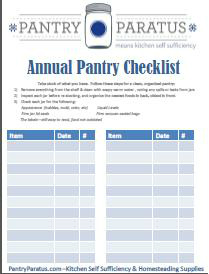
Get our free pantry checklist. Minimize loss by knowing what you have.
An oxygen absorber delays loss. It isn’t a permanent fix; it gives you time to find the problem before losing your food. It’s insurance. If you aren’t actually checking your food, rotating it, or routinely using it, then never mind. Don’t bother with using an oxygen absorber at all if you don’t inspect. You’re going to lose a lot of food no matter what.
This is where I pull out my best Mom-Speech about starving children in India.
When should you use Oxygen Absorbers?
All dry, home-packaged food that you plan to keep for 3 months or longer should have an oxygen absorber in the container. This includes dehydrated food, herbs, spices, grain, rice, flour, and salt. There are only two dry items that should not get an oxygen absorber: do not use them in sugar or brown sugar. They dry them out (even though they are not actually desiccants).
What Packaging Should Get an Oxygen Absorber?
Well, anything that stores dry food, but the type of packaging is dependent upon the frequency of access. For instance, all of the dehydrated foods and herbs that I am not currently using get vacuum sealed. Then I place several of those vacuum-sealed bags into a larger, sealed mylar bag (to block out light and to protect from mice and insects). Each individual vacuum-sealed bag gets an oxygen absorber.
If you’re putting your food directly into smaller mylar bags, put an oxygen absorber in that. Stuff going into the freezer—if it’s a dry item (like yeast, flour, etc), chuck one into the container.
My frequently-used stuff—like dehydrated onions, powdered vegetables, and bulk spices—all get an oxygen absorber in the mason jar. This isn’t keeping the food perfectly oxygen free. I am, after all, opening that jar fairly often. It does drastically extend the shelf-life though! I find it also keeps spice blends from getting clumpy (again, working like a desiccant even if they aren’t). The tip to this use is to remember to open and close the jar expediently.
What size of Oxygen Absorber Should I Use?
Anything a quart-sized jar or smaller, a single 50cc is perfect. If you are packing something larger or something with natural air space (granola vs. dense salt), you might want to double up. When you reach the size of a #10 can, you should use three 50cc absorbers. They come 200 in a pack, and if you re-seal the package as soon as you’re done with it, you’ll be using that same package for awhile.
Use 500cc Oxygen Absorbers for buckets. Wheat, rice, oats, all of which naturally last a long time anyway, should get at least 1 500cc absorber. We often use buckets for storing lots of smaller, sealed food bags. It provides another layer of protection. Wilson always chucks a 500cc absorber in the bucket anyway, regardless that every individual bag contains one. “Cheap insurance,” he says. We have never lost a bag of food sealed in a bucket with an absorber on top.
What is the Process of Using Oxygen Absorbers?
Fast. You use them fast. Wilson and I have a system for this that <yes, we’re dorks> is really fun! When we’re preserving food, it is rarely a bag here-and-there. Oh no, we go big.
Always preserve large quantities of food in smaller, manageable portions. Putting all of your eggs in one basket (I couldn’t resist) is never a good idea. If a mouse gets in to a 10 lb bag of oats, you’ve lost them all. Packing 10 one-pound bags is far more economical in the long-run. So this is how you do it:
- Place all of the jars or vacuum sealing bags on your table.
- Wearing gloves, fill all of them with the food to be preserved (using a funnel prevents spills and loss). Gloves, prevent your oils or moisture to contaminate the food.
- Put the jar lids next to the jars, or have the vacuum sealer ready to go and warmed up.
- One person opens the bag of absorbers and drops one quickly into each container.
- The other person runs behind, sealing lids or vacuum-sealing (a bit slower).
- Once you are done using them from the package, be sure to re-seal that package so that the leftovers will be there when you need them 6 months from now.
Okay, so now you understand the value of using oxygen absorbers to prevent food spoilage–pick up a couple of packs from Pantry Paratus & incorporate them into your food storage plan!
What are Oxygen absorbers and How works?

Oxygen Absorbers or Oxygen buster are used to remove oxygen from a sealed container, creating a nitrogen environment for long-term food/ pharmaceutical product storage.

Because air contains more than 78% nitrogen, more than 20% oxygen, and 1-2% water vapor and other gases also present at a very minimal percentage. Only Oxygen supports the growth of microorganisms and Oxygen react with different chemical compound and causes changes in color and odors in packaged Pharmaceutical and food products.

What Are the Benefits of Using Oxygen Absorbers?
- Extends shelf life of Pharmaceutical and food Products
- Prevents the growth of aerobic pathogens/ Microorganisms and spoilage organisms, including molds.
- It can prevent oxidation and hydrolysis in pharmaceuticals and help protect oxygen-sensitive medical devices and equipment.
- Prevents oxidation of vitamins A, C, and E
What Are Oxygen Absorbers Made Of?
Oxygen buster is two types. one is iron content and another is iron-free.

Oxygen absorbers are small packets/ Medium Packets that contain iron dust or powder. The packets are made of a permeable membrane that allows oxygen and moisture to enter into the packet but does not allow the iron powder to leak out from the packet. The Oxygen buster is safe to place on top of the food. They will not harm the food they are in contact with as they come in a sealed pouch.

Another oxygen scavenger being an iron-free oxygen absorber. An iron-free oxygen absorber is made of Ascorbic Acid, Sodium Carbonate, Activated Carbon, Water, Diatomaceous Earth which do not allow oxygen and moisture to enter the product
How Do Oxygen Absorbers Work?
‘Oxygen absorbers’ perform their action though a chemical reaction. They contain iron powder which reacts with the oxygen in the air causing the iron powder to rust. When all the iron powder has oxidized, the “oxygen absorbers” are “loaded” and the absorbing action stops. Remove the oxygen from an active absorber and the chemical reaction stops. Put them back in the air and the reaction starts again until the iron is gone.
Freeze Dried Food
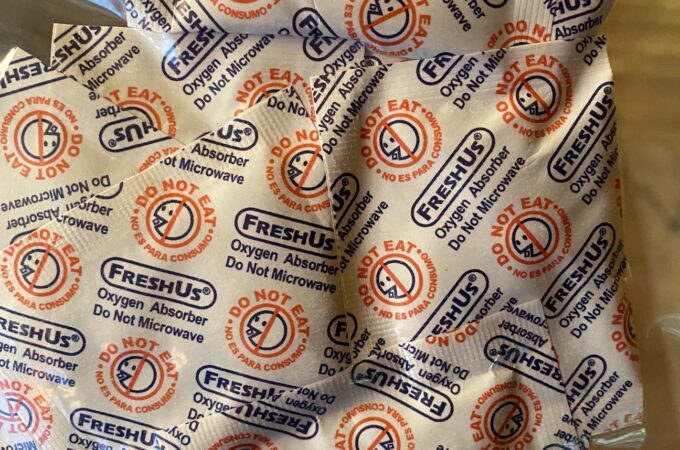
How to Use and Store Oxygen Absorbers for Freeze Drying or Long Term Food Storage May 19, 2021 Freeze Dried Food Off
What are Oxygen Absorbers?
Oxygen absorbers are packets containing iron powder sealed in a small packet made of material approved for contact with food.
How Do Oxygen Absorbers Work?
The packet is added to a Mylar bag or jar when preparing food for long term storage. The oxygen absorber removes oxygen through a chemical reaction. When the packet and powder inside are exposed to oxygen it reacts by oxidizing.
This brings the oxygen level of the container down to 0.1%. This method is more effective than vacuum sealing (2%) or nitrogen flushing (5%).
How Do I Know if the Oxygen Absorbers are Still Good?
I would not rely on the oxygen indicators. They don’t provide you the information that you need regarding the health of your oxygen absorbers. They only tell you that the oxygen level in the package is below 1%. Remember that a properly prepared container of food with a fresh oxygen absorber added, will bring the oxygen level down to 0.1%.
Beware of Buying Oxygen Absorbers on EBay and Amazon
People who want to have a business reselling oxygen absorbers just need to buy oxygen absorbers in bulk, repackage and resell to end users in smaller bags of 10 or 25 or 50.
You do not know if these individual sellers are handling the oxygen absorbers correctly in the re-packaging process. If they are adding oxygen indicators, the oxygen absorbers may be spent, but if the oxygen absorbers have a little bit of power, the indicator will give the false impression that they oxygen absorbers are still good. Therefore, do not rely on an oxygen indicator to tell you if your oxygen absorbers are good
Where To Buy Oxygen Absorbers
I buy my oxygen absorbers from Discount Mylar Bags or Harvest Right.
How Can You Tell if your Oxygen Absorber is Good or Not?
- When you take a fresh oxygen absorber out of the package, pinch it. It should feel soft and powdery. As the packet absorbs energy, there is a chemical reaction that causes the powdery iron inside to become crunchy and hard. Eventually the powder will become a single solid piece.
- Absorbers begin to get warm as you work with them. If you leave a pile of oxygen absorbers in the open plastic bag, you may see condensation developing in the bag due to the warm oxygen absorber. This is not good!
How Do You Use Oxygen Absorbers?
Have the freeze dried food ready, in Mylar bags or mason jars, ready for the oxygen absorbers before opening the sealed package of oxygen absorbers. Take out the number of oxygen absorbers needed for your batch. There are two ways to store the opened bag of oxygen absorbers:
- Put the unused oxygen absorbers in a mason jar with a lid. You will see the lid gets sucked down and seals the jar. Be careful to inspect your jars and lids that you use for storing oxygen absorbers. Look for tiny cracks and chips around the rim, especially when reusing jars. I have seen antique canning jars spoil a batch of oxygen absorbers because the jar opening had some defects that prevented a perfect seal.
- Keep the unused oxygen absorbers in the plastic pouch they came in and reseal with an appropriate sealer, or transfer to a Mylar bag and use the heat sealer. Or if you are nervous, you can do all three! Seal the oxygen absorbers back in their original plastic, seal that in a Mylar bag and put the whole thing in a mason jar. That is overkill, for sure, but I understand!
How many oxygen absorbers are used?
I found this chart from Homestead and Prepper website. Currently I only use mylar bags that are one gallon or smaller and use 300cc absorbers.
What you need to know when using Oxygen Absorbers
The first thing I learned was that oxygen absorbers are smallish little packets that hold an iron powder. Through the magic of technology, or so it seems to me, the outer wrapper lets oxygen and moisture in where it is absorbed by the iron powder. It does so while maintaining the integrity of the outer wrapper while at the same time preventing leakage of the powder back into the packaged food.
In the process of sucking up moisture, the iron in the O2 absorber begins to rust. This creates oxidation and before you know it, in a well-sealed container, 99.99% of the oxygen is used up.
The Proper Way to Use Oxygen Absorbers
There are a few precautions you need to be aware of when using oxygen absorbers.
The most important precaution is to limit the exposure of unused packets to air. Take out only what you are going to use in the next 15 minutes or so and seal the rest up in a jar with a screw top lid. Don’t put them in a zip lock bag because they will immediately suck up the residual oxygen and become useless.
Be mindful of the little pink pill. Our oxygen absorbers will always include a little pink pill as an indication of their freshness.
If the pill is blue, the absorbers are toast so don’t use them. However, if they are just starting to turn – not quite pink and not quite blue – they are probably okay since the change of colour can happen in as little as 10 or 15 minutes.
Another good test of their freshness is to pick one up an hold it. It may feel warm. It will also feel soft and powdery, like a little pillow. If it gets real hot and uncomfortable, it is in full out working mode and has probably been exposed to the air for too long to be usable. In this case it may also start to feel hard and brick like. Toss it.
Oxygen absorbers themselves have a limited shelf life, even when sealed. Only purchase an amount that you will use within a year.
4 Additional Tips for Using Oxygen Absorbers
1. If you decide to do some research on your own, prepare to be confused. You will find that some sources recommend you should use a larger quantity of oxygen absorbers when packaging dried pasta and beans versus packaging grains, flours, and rice. The reason for this is that the latter are more dense so there is less oxygen to get rid of.
2. Almost anything can be packaged using oxygen absorbers and they are so inexpensive, there is no reason not to use them. There are two things, however, that should be packaged without them. They are sugar and salt. Why? Sugar will turn to a brick of concrete and the salt simply does not need anything special to keep it preserved. It might also clump.
3. A bag sealed with product plus an oxygen absorber may or may not turn brick like in a day or two or even up to a week. The ability to fully compress is dependent upon factors such as head room and the amount of air that was sucked out during the sealing process. If you have used an oxygen absorber sufficient for the size of your packaging, the oxygen will be gone. The extra air is simply nitrogen and it will not harm your food. Of course, if it makes you feel better, you could open the package and start all over again but that is not really necessary for anything but your peace of mind.
4. Do not confuse oxygen absorbers with desiccants. The oxygen absorber removes oxygen and the desiccant removes moisture.
The Final Word
There is no reason that oxygen absorbers should be a big mystery. The reality is that they are super easy to use and are inexpensive to buy. Using them will guarantee that your bulk foods will stay fresh for longer as well have an improved taste, flavour and appearance.