What is Manual Transmission and How it Works?
Manual Transmission (MT) or Automatic Transmission (AT), which is best? This is always being a hot topic for the debate when it comes to choosing a vehicle for different purpose, as both the transmission system have advantages over each other which give rise to many questions like why the formula cars being the best automobile uses MT? Why it is advised to use MT when there is a need of high torque and sudden shifting? Let’s discuss these points.
A manual transmission is a house of various components like gears, shafts and various selecting mechanism that are arranged in a special fashion to provide appropriate torque and speed ratios to compete with the challenges provided by the different road conditions, the shifting from high torque to high speed and vice-versa is performed manually by symmetrical pushing and pulling of the gear lever by the driver.

The vehicle with MT usually comes with n-speed manual with or without reverse configuration where ‘n’ denotes the number of speed ratios or shifts for example-Maruti Suzuki swift comes with 5-speed 1-reverse manual transmission.
Why do We Need Manual Transmission?
Manual transmission or manual gearbox is always being an important part of an automobile since the introduction of the transmission and almost covers the 50-60 % of the total vehicle that is on the road today because of its various advantages over others.
- When the vehicle bears uncertain load due to different load conditions like overweight and road conditions high torque is required, so to fulfil this need a manual transmission is required which provide high torque ratios.
- When we talk about race cars due to zigzag track sudden change of gears from high torque to high speed is continuously required so the use of manual transmission with quick response shifter is a must.
- In a heavy vehicle like a truck that has to carry an uncertain load to uncertain road conditions like hills, countrysides, etc very high torque is required which can be fulfilled with the manual transmission or gearbox.
- Due to the low cost and low maintenance provided by the manual transmission system
Commercial cars prefer a manual transmission. And If you are just simply looking for a replacement, check out the best rebuilt transmissions at Reman-Transmission.com.
Main Components or Parts
1. Shafts–
There are usually 3 shafts used in a manual transmission that are-
(i) Main-Shaft-
It is the shaft that is also called the output shaft and is placed in front of the clutch shaft and in parallel to the lay-shaft. gears, gear lever along with the meshing devices such as dog clutches and synchromesh devices are mounted over this shaft.
(ii) Lay-shaft or Counter Shaft-
It is the shaft used as an intermediate shaft between the clutch shaft and the main shaft, it is usually mounted below and parallel to the main shaft, and act as an engine output carrier from the clutch shaft to the main shaft.
(iii) Clutch-Shaft-
Please enable JavaScript
It is the shaft that carries the rotational output from the engine’s flywheel to the transmission with the help of a clutch that engages and disengages the output from the engine.
2. Gears –
There are mainly 4 types of gears used in manual gearbox that are-
(i) Spur Gear: Used in old sliding mesh gearbox these types of gears have straight cut teethes.
(ii) Helical Gear: They are the modified version of the latter as they have angular cut teethes.
(iii) Bevel: They are best of all above gears having a conical cross-sectional area with angular cut teethes.
(iv) Idler-gear: It is the small gear used as a reverse gear usually mounted over the lay shaft.
3. Meshing Devices:
There are usually 2 types of meshing devices used in manual transmission-
(i) Dog Clutches: They are the devices used for meshing of gears in constant mesh gearbox.
(ii) Synchromesh Devices: They are the devices which are used in synchromesh gearbox for the meshing, these devices provide smooth shifting of gears.
4. Gear lever-
It is the lever used by the driver to shift a gear.
Also Read:
Types of Manual Gearbox Used
There are 3 types of manual gearboxes used since the introduction of the transmission that are-
1. Sliding Mesh Gearbox
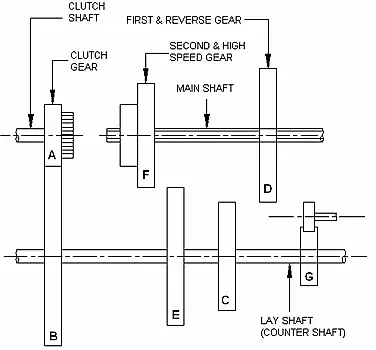
This is the oldest type of gear box used. In this type of gearbox shifting occurs by the sliding of gears over the splined main-shaft in order to mesh with the appropriate gear on the lay-shaft whose one gear is in constant mesh with the clutch shaft gear in order to carry rotational motion for the conversion(high torque or high speed)as required by the drive, this gearbox requires special technique for the shifting that is usually known as double-declutching and also the meshing was so noisy and harsh ,that gives rise to the development of new gearbox system.
Note-They were usually came with max of 3-speed manual shifts.
2. Constant Mesh Gearbox
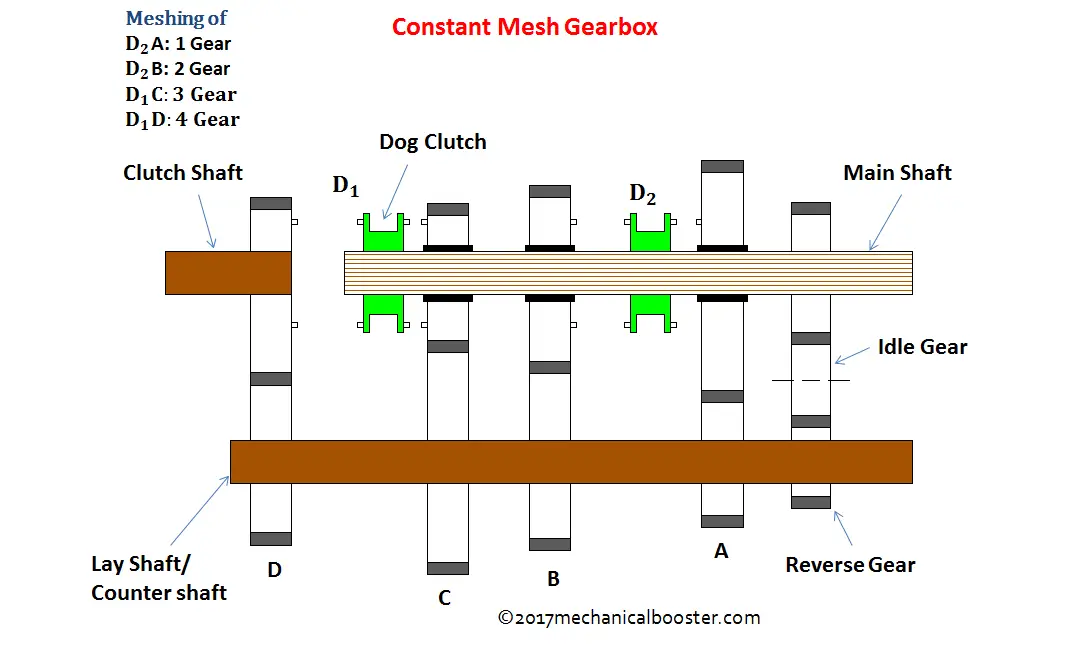
This is the modified version of the later which was introduced to over the limitations of the later, in this type all the gears on the main-shaft, lay-shaft and clutch-shaft are in constant mesh with each other and the selection of the appropriate gear is done by the special meshing devices known as dog clutches which slides over the splined main-shaft in order to select the appropriate gear as need by the drive. This system flushes away the double-de-clutching problem and made the drive less noisy as the spur gears of the sliding mesh is replaced with the helical or bevel gears , but the shifting of gear is still not smooth and also there is a lot of wear and tear of the dog clutches due to the different rotational speed of the shafts while meshing, which leads to the high maintenance.
Note – They came with 4 or 5-speed 1-reverse manual shift configuration.
3. Synchromesh Gearbox
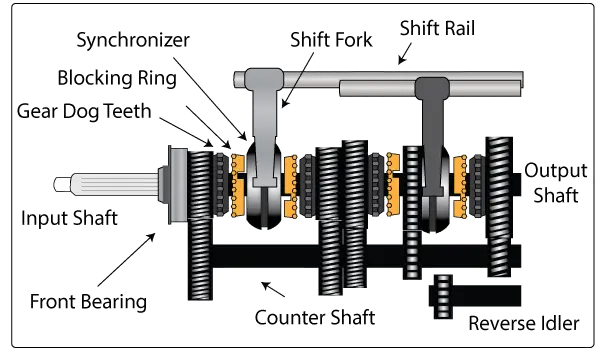
This is the latesttype of gearbox used from decades as this system overcomes all the limitations provided by the constant mesh gearbox or sliding mesh gearbox and also improves the output capabilities of the manual transmission system, in this type the dog clutches from the constant mesh gearbox is replaced by the synchromesh devices which first bring the main-shaft and lay-shaft at same speed by the frictional contact, then meshing of the appropriate gear occurs which makes the system smooth and also decreases the maintenance of the gearbox, today this system usually comes with 5-speed 1-reverse manual transmission configuration.
Note- They are coming with 5-speed 1-reverse configuration.
Working of Modern Manual Transmission
- When the driver presses the clutch pedal in order to shift the gear, the disengagement of the engine flywheel and clutch shaft occurs which lets the driver to select appropriate gear according to the need of the drive.
- When the gear lever is pushed or pulled by the driver in order to select the particular gear, the synchromesh device which is attached to the particular link slides towards the selected constantly meshed pair of gears .
- At first, this synchromesh device makes the frictional contact with the selected pair and the shafts in order to bring the rotating shafts at the same speed.
- Then the pair of gears having appropriate gear ratio is meshed with the synchromesh device in order to obtain output given by the pair of gears ,which is then transferred to the main shaft.
- Then this output with appropriate torque or speed is transferred to the final drive when driver releases the clutch pedal which completes the shifting of gear.
- When it comes to the selection of reverse gear the contact of synchromesh device is made with the idler gear which in turn reverses the rotation of the main-shaft and the drive starts moving in reverse direction.
Note – As constant meshing of gears and Continuous sliding of synchronise devices is there so constant supply of lubricating oil should be there in order to avoid wear and tear of the components of the manual transmission.
For better explanation how manual transmission works watch the video given below:
Application
Specifically, manual transmission covers 52% of the total automobile market which means more than half the vehicle on the roads are equipped with MT.
Manual transmission
Manual transmissions are characterized by gear ratios that are selectable by engaging pairs of gears inside the transmission. Conversely, automatic transmissions feature clutch packs to select gear ratio. Transmissions that employ clutch packs but allow the driver to manually select the current gear are called semi-automatic transmissions.
Contemporary automotive manual transmissions are generally available with four to six forward gears and one reverse gear, although manual transmissions have been built with as few as 2 and as many as 7 gears. Some manuals are referred to by the number of forward gears they offer (e.g., 5-speed) as a way of distinguishing between automatic or other available manual transmissions. In contrast, a 5-speed automatic transmission is referred to as a 5-speed automatic.
Manual transmissions come in two basic types: simple unsynchronized systems, where gears are spinning freely and their relative speeds must be synchronized by the operator to avoid noisy and damaging «clashing» and «grinding» when trying to mesh the rotating teeth; and synchronized systems, which eliminate this necessity while changing gears.
Inside of a manual gearbox
Contents
Unsynchronized transmission [ ]
The earliest automotive transmissions were entirely mechanical unsynchronized gearing systems. They could be shifted, with multiple gear ratios available to the operator, and even had reverse. But the gears were engaged by sliding mechanisms or simple clutches, which required skills of timing and careful throttle manipulation when shifting, so that the gears would be spinning at roughly the same speed when engaged; otherwise the teeth would refuse to mesh.
When upshifting, the speed of the gear driven by the engine had to drop to match the speed of the next gear; as this happened naturally when the clutch was depressed, it was just a matter of skill and experience to hear and feel when the gears managed to mesh. However, when downshifting, the gear driven by the engine had to be sped up to mesh with the output gear, requiring engagement of the clutch for the engine to speed up the gears. trucks and machinery as well as dedicated racing transmissions are still usually nonsynchromesh transmissions, known colloquially as «crashboxes», for several reasons. Being made of brass, synchronizers are prone to wear and breakage more than the actual gears, which are cast iron, and the rotation of all the sets of gears at once results in higher frictional losses. In addition, the process of shifting a synchromesh transmission is slower than that of shifting a nonsynchromesh transmission. For racing of production based transmissions, sometimes half the dogs on the synchros are removed to speed the shifting process, at the expense of much more wear.
Similarly, most modern motorcycles still utilise unsynchronised transmissions. Synchronisers are generally not necessary or desirable in motorcycle transmissions. The low gear inertias and higher strengths mean that ‘forcing’ the gears to alter speed is not damaging, and the selector method on modern motorcycles (pedal operated) is not conducive to having the long shift time of a synchronised gearbox. Because of this, it is still necessary to synchronise gear speeds by ‘blipping-the-throttle’ when shifting into a lower gear on a motorcycle.
Synchronized transmission [ ]
Top and driver’s side view of a typical manual transmission, in this case a Ford , used in cars with external floor shifters.
A modern gearbox is of the constant mesh type, in which all gears are always in mesh but only one of these meshed pairs of gears is locked to the shaft on which it is mounted at any one time, the others being allowed to rotate freely; thus greatly reducing the skill required to shift gears.
Most modern cars are fitted with a synchronised gear box, although it is entirely possible to construct a constant mesh gearbox without synchromesh, as found in motorcycle for example. In a constant mesh gearbox, the gears of the different transmission speeds are always in mesh and rotating, but the gears are not directly rotationally connected to the shafts on which they rotate. Instead, the gears can freely rotate or be locked to the shaft on which they are carried. The locking mechanism for any individual gear consists of a collar on the shaft which is able to slide sideways so that teeth or «dogs» on its inner surface bridge two circular rings with teeth on their outer circumference; one attached to the gear, one to the shaft. (One collar typically serves for two gears; sliding in one direction selects one transmission speed, in the other direction selects the other) When the rings are bridged by the collar, that particular gear is rotationally locked to the shaft and determines the output speed of the transmission. In a synchromesh gearbox, to correctly match the speed of the gear to that of the shaft as the gear is engaged, the collar initially applies a force to a cone-shaped brass clutch which is attached to the gear, which brings the speeds to match prior to the collar locking into place. The collar is prevented from bridging the locking rings when the speeds are mismatched by synchro rings (also called blocker rings or balk rings, the latter being spelled «baulk» in the UK). The gearshift lever manipulates the collars using a set of Internals [ ]
Shafts [ ]
Like other transmissions, a manual transmission has several shafts with various gears and other components attached to them. Typically, there are three shafts: an input shaft, a countershaft and an output shaft. The countershaft is sometimes called a layshaft.
The input and output shaft lie along the same line, and may in fact be combined into a single shaft within the transmission. This single shaft is called a mainshaft. The input and output ends of this combined shaft rotate independently, at different speeds, which is possible because one piece slides into a hollow bore in the other piece, where it is supported by a bearing. Sometimes the term mainshaft refers to just the input shaft or just the output shaft, rather than the entire assembly.
In some transmissions, it’s possible for the input and output components of the mainshaft to be locked together to create a 1:1 gear ratio, causing the power flow to bypass the countershaft. The mainshaft then behaves like a single, solid shaft, a situation referred to as direct drive.
Even in transmissions that do not feature direct drive, it’s an advantage for the input and output to lie along the same line, because this reduces the amount of bearings in their hubs. Reverse is typically implemented differently, see the section on Reverse.
When the transmission is in neutral, and the clutch is disengaged, the input shaft, clutch disk and countershaft can continue to rotate under their own inertia. In this state, the engine, the input shaft and clutch, and the output shaft, all rotate independently.
Dog clutch [ ]
The gear selector does not engage or disengage the actual gear teeth which are permanently meshed. Rather, the action of the gear selector is to lock one of the freely spinning gears to the shaft that runs through its hub. The shaft then spins together with that gear. The output shaft’s speed relative to the countershaft is determined by the ratio of the two gears: the one permanently attached to the countershaft, and that gear’s mate which is now locked to the output shaft.
Locking the output shaft with a gear is achieved by means of a dog clutch selector. The dog clutch is a sliding selector mechanism which is splined to the output shaft, meaning that its hub has teeth that fit into slots (splines) on the shaft, forcing it to rotate with that shaft. However, the splines allow the selector to move back and forth on the shaft, which happens when it is pushed by a selector fork that is linked to the gear lever. The fork does not rotate, so it is attached to a collar bearing on the selector. The selector is typically symmetric: it slides between two gears and has a synchromesh and teeth on each side in order to lock either gear to the shaft.
Synchromesh [ ]
If the teeth, the so-called dog teeth, make contact with the gear, but the two parts are spinning at different speeds, the teeth will fail to engage and a loud grinding sound will be heard as they clatter together. For this reason, a modern dog clutch in an automobile has a synchronizer mechanism or synchromesh. Thanks to this mechanism, before the teeth can engage, a frictional contact is made which brings the selector and gear to two parts to rotate at the same speed. Moreover, until synchronization occurs, the teeth are prevented from making contact, because further motion of the selector is prevented by a blocker ring. When synchronization occurs, friction on the blocker ring is relieved and it twists slightly, bringing into alignment certain grooves and notches that allow further passage of the selector which brings the teeth together. Of course, the exact design of the synchronizer varies from manufacturer to manufacturer.
The synchronizer has to change the momentum of the entire input shaft and clutch disk. Additionally, it can be abused by exposure to the momentum and power of the engine itself, which is what happens when attempts are made to select a gear without fully disengaging the clutch. This causes extra wear on the rings and sleeves, reducing their service life. When an experimenting driver tries to «match the revs» on a synchronized transmission and force it into gear without using the clutch, it is actually the synchronizer that makes up for any discrepancy in RPM, deceiving the driver into an exaggerated sense of how much human skill was involved.
Reverse [ ]
The previous discussion applies to the forward gears. The implementation of the reverse gear is usually different, implemented in the following way to reduce the cost of the transmission. Reverse is also a pair of gears: one gear on the countershaft and one on the output shaft. However, whereas all the forward gears are always meshed together, there is a gap between the reverse gears. Moreover, they are both attached to their shafts: neither one rotates freely about the shaft. What happens when reverse is selected is that a small gear, called an idler gear or reverse idler, is slid between them. The idler has teeth which mesh with both gears, and thus it couples these gears together and reverses the direction of rotation without changing the gear ratio.
Thus, in other words, when reverse gear is selected, in fact it is actual gear teeth that are being meshed, with no aid from a synchronization mechanism. For this reason, the output shaft must not be rotating when reverse is selected: the car must be stopped. In order that reverse can be selected without grinding even if the input shaft is spinning inertially, there may be a mechanism to stop the input shaft from spinning. The driver brings the vehicle to a stop, and selects reverse. As that selection is made, some mechanism in the transmission stops the input shaft. Both gears are stopped and the idler can be inserted between them. There is a clear description of such a mechanism in the Honda Civic 1996-1998 Service Manual, which refers to it as a «noise reduction system»:
Whenever the clutch pedal is depressed to shift into reverse, the mainshaft continues to rotate because of its inertia. The resulting speed difference between mainshaft and reverse idler gear produces gear noise [grinding]. The reverse gear noise reduction system employs a cam plate which was added to the reverse shift holder. When shifting into reverse, the 5th/reverse shift piece, connected to the shift lever, rotates the cam plate. This causes the 5th synchro set to stop the rotating mainshaft. (13-4)
A reverse gear implemented this way makes a loud whining sound, which is not heard in the forward gears. The teeth on the forward gears of consumer automobiles are helically cut. When helical gears rotate, their teeth slide together, which results in quiet operation. In spite of all forward gears being always meshed, they do not make a sound that can be easily heard above the engine noise. By contrast, reverse gears are Design Variations [ ]
Gear Variety [ ]
Manual transmissions are often equipped with 4, 5, or 6 forward gears. Nearly all have exactly one reverse gear. In three or four speed transmissions, in most cases, the topmost gear is «direct», i.e. a 1:1 ratio. For five speed or higher transmissions, the highest gear is usually an overdrive gear, with a ratio of less than 1:1. Older cars were generally equipped with 3-speed transmissions, or 4-speed transmissions for high performance models and 5-speeds for the most sophisticated of automobiles; in the 1970s, 5-speed transmissions began to appear in low priced mass market automobiles and even compact pickup trucks, pioneered by Toyota (who advertised the fact by giving each model the suffix SR5 as it acquired the fifth speed). Today, mass market automotive manual transmissions are essentially all 5-speeds, with 6-speed transmissions beginning to emerge in high performance vehicles in the early 1990s, and recently beginning to be offered on some high-efficiency and conventional passenger cars.
External Overdrive [ ]
On earlier models with three or four forward speeds, the lack of an overdrive ratio for relaxed and fuel-efficient highway cruising was often filled by incorporation of a separate overdrive unit in the rear housing of the transmission, separately actuated by a knob or button, often incorporated into the gearshift knob.
Shaft and Gear Configuration [ ]
The input shaft need not turn a pinion which rotates the countershaft. Another possibility is that gears are mounted on the input shaft itself, meshed with gears on the countershaft, in which case the countershaft then turns the output shaft. In other words, it’s a matter of design on which shaft the driven and driving gears reside.
The distribution of the shifters is also a matter of design; it need not be the case that all of the free-rotating gears with selectors are on one shaft, and the permanently splined gears on the other. For instance a five speed transmission might have the first-to-second selectors on the countershaft, but the third-to-fourth selector and the fifth selector on the mainshaft, which is the configuration in the 1998 Honda Civic. This means that when the car is stopped and idling in neutral with the clutch engaged input shaft spinning, the third, fourth and fifth gear pairs do not rotate.
Clutch [ ]
In all vehicles using a transmission (virtually all modern vehicles), a coupling device is used to be able to separate the engine and transmission when necessary. The clutch is what accomplishes this in manual transmissions. Without it, the engine and tires would at all times be inextricably linked, and anytime the vehicle is at a stop, so would be the engine. Moreover, without the clutch, changing gears would be very difficult, even with the vehicle moving already: deselecting a gear while the transmission is under load requires considerable force, and selecting a gear requires the revolution speed of the engine to be held at a very precise value which depends on the vehicle speed and desired gear. In a car the clutch is usually operated by a pedal; on a motorcycle, a lever on the left handlebar serves the purpose.
- When the clutch pedal is fully depressed, the clutch is fully disengaged, and no torque is transferred from the engine to the transmission, and by extension to the drive wheels. In this state, it’s possible to select gears or stop the car.
- When the clutch pedal is fully released, the clutch is fully engaged, and essentially all of the engine’s torque is transferred. In this state, the clutch does not slip, but rather behaves like a rigid coupling. Power is transmitted to the wheels with minimal loss.
- In between these extremes, the clutch slips to varying degrees. When the clutch slips, it transmits torque, in spite of the difference in speeds between the engine crankshaft and the transmission input. Because the torque is transmitted by means of friction, a lot of power is wasted as heat, which must be dissipated by the clutch. Slip allows the vehicle to be started from a standstill, and when it is already moving, slip allows the engine rotation to gradually adjust to a newly selected gear ratio, resulting in a smooth, jolt-free gear change.
- Because of the heat that a slipping clutch generates, slip cannot be maintained for a long time. Moreover, because energy is wasted, it would be undesireable to do so. Skilled drivers rarely allow a clutch to slip for more than about one second. Making effective use of clutch slip requires the development of feeling through practice, similar to learning to play a musical instrument or to play a sport.
- Note: Automatic transmissions also use a coupling device, however, a clutch is not present. In these kinds of vehicles, the Gear selection [ ]
Floor-mounted shifter [ ]
In most modern cars, gears are selected through a lever attached to the floor of the automobile—this selector is often called a File:Shift stick.jpg
5 speed shift stick of a 1999 Mazda Protege.
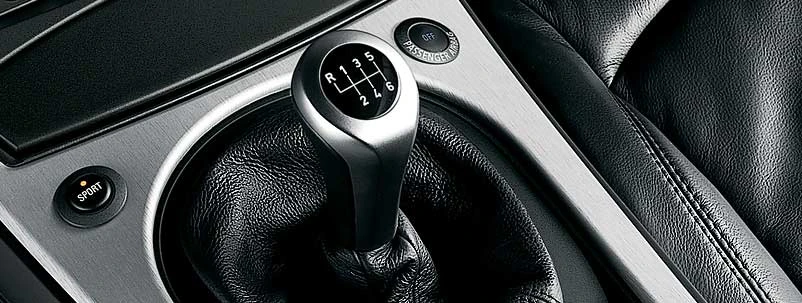
A sample layout of a four-speed transmission is shown below. N marks neutral, or the position where no gears are engaged. In reality, the entire horizontal line is a neutral position, although the shifter is usually equipped with springs so that it will return to the N position if not left in another gear. The R denotes reverse, which is technically a fifth gear on this transmission.
This layout is reasonably intuitive because it starts at the upper left and works top to bottom, left to right, with reverse far away and toward the rear of the car. There is usually a mechanism that only allows selection of reverse from the neutral position, so reverse will be less likely to be accidentally chosen when downshifting from 5th to 4th (or by someone used to a 6-speed transmission and trying to shift from 5th to the non-existent 6th).
This five-speed layout, found on a number of older models including Lamborghinis, is commonly referred to as a «dog-leg» pattern, because of the «up and over» 1-2 shift. Its use, especially on sports cars, has since been deprecated because the long, offset 1-2 shift can have a notable effect on a car’s acceleration, especially from 0-60 mph.
Another five-speed shift pattern (common on many European cars) is this:
Transmissions equipped with this shift pattern usually feature a lockout mechanism that requires the driver to depress a switch or the entire gear lever when entering reverse, so that reverse is not accidentally selected when trying to find first gear.
A typical pattern for the more modern six-speed transmission is shown here
A six-speed manual transmission (seven speeds with reverse) is widely considered to be the largest number of gears that can be contained within a variation of the «H» shift pattern. It is for this reason that BMW, after succumbing to American market pressures for a conventional manual transmission in their M5 and M6 models, was forced to switch from a seven-speed sequential gearbox to a six-speed conventional manual. Note that: reverse is placed outside of the «H», with a canted shift leg. This is to prevent the shift lever from intruding too far into the driver’s footwell when reverse is selected. This is the most common layout for a six-speed manual transmission.
Most front-engined, rear-wheel drive cars have a transmission that sits between the driver and the front passenger seat. Floor-mounted shifters are often connected directly to the transmission. Front-wheel drive and rear-engined cars often require a mechanical linkage to connect the shifter to the transmission.
A 4-speed floor shifter is sometimes referred to as «Four on the Floor».
Column-mounted shifter [ ]
Some older cars feature a gear lever which is mounted on the steering column of the car. Many automatic transmissions still use this placement, but manual column shifters are no longer common.
Column shifters are mechanically similar to floor shifters, although shifting occurs in a vertical plane instead of a horizontal one. Column shifters also generally involve additional linkages to connect the shifter with the transmission.
The 3-speed shift pattern is typical of American cars, trucks, and vans produced with manual transmissions until the 1950s and 1960s. This pattern is not «intuitive», as the shifter has to be moved forward (into R) to make the car go backward (and vice-versa).
First gear in a 3-speed is often called «low,» while third is usually called «high.» There is, of course, no overdrive.
A 3-speed column shifter is sometimes referred to as «Three on a Tree».
Note that reverse in a car with a column shift is in nearly the same position as park (P) is on a car with a column-mounted gear selector with an automatic transmission.
Some automakers, including Mercedes-Benz and Toyota, have made 4- and even 5-speed column-mounted shifters (the Toyota Hiace van had a «five on the tree» shifter well into the 1990s).
Sequential manual [ ]
Some transmissions do not allow the driver to arbitrarily select any gear. Instead, the driver may only ever select the next-lowest or next-highest gear ratio. These transmissions often provide clutch control, but the clutch is only necessary when selecting first or reverse gear from neutral. Most gear changes can be performed without the clutch.
Sequential transmissions are generally controlled by a forward-backward lever, foot pedal, or set of paddles mounted behind the steering wheel. In some cases, these are connected mechanically to the transmission. In many modern examples, these controls are attached to sensors which instruct a transmission computer to perform a shift—many of these systems can be switched into an automatic mode, where the computer controls the timing of shifts, much like an automatic transmission.
Motorcycles typically employ sequential transmissions, although the shift pattern is modified slightly for safety reasons. In a motorcycle the gears are usually shifted with the left foot pedal, the layout being this:
The pedal goes one step — both up and down — from the center, before it reaches its limit and has to be allowed to move back to the center position. Thus, changing multiple gears into one direction is accomplished by repeatedly pumping the pedal, either up, or down. Although neutral is listed as being between first and second gears for this type of transmission, it «feels» more like first and second gear are just «further away» from each other than any other two sequential gears. For inexperienced riders, this can lead to difficulty in finding neutral. The reason neutral does not actually have its own spot in the sequence is to make it quicker to shift from first to second when moving. You will not accidentally shift into neutral. The reason for having neutral between the first and second gears instead of at the bottom is that when stopped, the rider can just click down repeatedly and know that they will end up in first and not neutral.
Semi-manual [ ]
Some very new transmissions (BMW’s Sequential Manual Gearbox (SMG) and Audi’s Direct-Shift Gearbox (DSG), for example) are conventional manual transmissions with a computerized control mechanism. These transmissions feature independently selectable gears but do not have a clutch pedal. Instead, the transmission computer controls a servo which disengages the clutch when necessary.
These transmissions vary from sequential transmissions in that they still allow nonsequential shifts: BMWs SMG system, for example, can shift from 6 th gear directly to 4 th gear when decelerating from high speeds.
Comparison with automatic transmissions [ ]
Manual transmissions are typically compared to automatic transmissions, as the two represent the majority of options available to the typical consumer. These comparisons are general guidelines and may not apply in certain circumstances. Additionally, the recent popularity of semi-manual and semi-automatic transmissions renders many of these points obsolete. It should be kept in mind that some of these points are true of «conventional» automatic transmissions which shift gears and are coupled to the engine with a Advantages [ ]
- Manual transmissions typically offer better fuel economy than automatics. [1] Increased fuel economy with a properly operated manual transmission vehicle versus an equivalent automatic transmission vehicle can range from 5 % to about 15 % depending on driving conditions and style of driving — extra urban or urban (highway or city). There are several reasons for this:
- Mechanical efficiency. The manual transmission couples the engine to the transmission with a rigid clutch instead of a [2]
- Fuel cut-off. The torque converter of the automatic transmission is designed for transmitting power from the engine to the wheels. Its ability to transmit power in the reverse direction is limited. During deceleration, if the torque converter’s rotation drops beneath its stall speed, the momentum of the car can no longer turn the engine, requiring the engine to be idled. By contrast, a manual transmission, with the clutch engaged, can use the car’s momentum to keep the engine turning, in principle, all the way down to zero RPM. This means that there are better opportunities, in a manual car, for the electronic control unit (ECU) to impose deceleration fuel cut-off (DFCO), a fuel-saving mode whereby the fuel injectors are turned off if the throttle is closed (foot off the accelerator pedal) and the engine is being driven by the momentum of the vehicle. Automatics further reduce opportunities for DFCO by shifting to a higher gear when the accelerator pedal is released, causing the RPM to drop. [citation needed] ||>>
- The heat issue can be important in certain situations, like climbing long hills in hot weather, particularly if pulling a load. Unless the automatic’s torque converter is locked up (which typically only happens in an overdrive gear that would not be engaged when going up a hill) the transmission can overheat. [5] A manual transmission’s clutch only generates heat when it slips, which does not happen unless the driver is riding the clutch pedal.
- An example: the driver, anticipating a turn, can downshift to the appropriate gear while the steering is still straight, and stay in gear through the turn. This is the correct, safe way to execute a turn. An unanticipated change of gear during a sharp turn can cause skidding if the road is slippery.
- Another example: when starting, the driver can control how much torque goes to the tires, which is useful for starting on slippery surfaces such as ice, snow or mud. This can be done with clutch finesse, or possibly by starting in second gear instead of first. The driver of an automatic can only put the car into drive, and play with the throttle. The torque converter can easily dump too much torque into the wheels, because when it slips, it acts as an extra low gear, passing through the engine power, reducing the rotations while multiplying torque. An automatic equipped with ESC, however, does not have this disadvantage. [citation needed] ||>>
- Yet another example: passing. When the driver is attempting to pass a slower moving vehicle by making use of a lane with opposite traffic, he or she can select a lower gear for more power at exactly the right moment when conditions are right to begin the manoeuver. Automatics have a delayed reaction time, because the driver can only indicate his intent by pressing the throttle. The skilled manual transmission driver has an advantage of superior finesse and confidence in such situations. [citation needed] ||>>
- It’s much more difficult for the driver to fidget in a manual transmission car, for instance by eating, drinking beverages, or talking on a cellular phone without a headset. During gear shifts, two hands are required. One stays on the wheel, and the other operates the gear lever. The hand on the wheel is absolutely required during turns, and tight turns are accompanied by gear changes. If the hand leaves the wheel, the steering will begin to straighten. In general, the more demanding the driving situation, the more difficult it is for the manual driver to do anything but operate the vehicle. The driver of an automatic transmission can engage in distracting activities in any situation, such as sharp turns through intersections or stop-and-go traffic.
- The driver of a manual transmission car can develop an accurate intuition for how fast the car is traveling, from the sound of the motor and the gear selection. It’s easier to observe the lower speed limits like 30 km/h and 50 km/h without glancing at the instrumentation.
Disadvantages [ ]
- Manual transmissions require more driver interaction than automatic transmissions. Whether this is a disadvantage is debatable since many consider interaction with the car a good thing. It’s much more difficult for the driver to fidget in a manual transmission car, for instance by eating, drinking beverages, or talking on a cellular phone without a headset. During gear shifts, two hands are required. One stays on the wheel, and the other operates the gear lever. The hand on the wheel is absolutely required during turns, and tight turns are accompanied by gear changes. If the hand leaves the wheel, the steering will begin to straighten. In general, the more demanding the driving situation, the more difficult it is for the manual driver to do anything but operate the vehicle. The driver of an automatic transmission can engage in distracting activities in any situation, such as sharp turns through intersections or stop-and-go traffic.
- A driver may inadvertently shift into the wrong gear with a manual transmission, potentially causing damage to the engine and transmission as well as compromising safety.
- Manual transmissions are more difficult to learn to drive as one needs to develop a feel for properly engaging the clutch.
- The smooth and quick shifts of an automatic transmission are not guaranteed when operating a manual transmission.
- Manual transmissions are slightly harder to start when stopped upward on a hill, but this is overcome with a little experience.
- The clutch disc is a wear item and must be replaced periodically. This is typically a labor intensive process and can be an expensive service.
Applications and popularity [ ]
Many types of automobiles are equipped with manual transmissions. Small economy cars predominantly feature manual transmissions because they are relatively cheap and efficient, although many are optionally equipped with automatics. Economy cars are also often powered by very small engines, and automatic transmissions can make them comparatively very slow, while a manual transmission makes much more efficient use of the power produced.
Sports cars are also often equipped with manual transmissions because they offer more direct driver involvement and better performance. Off-road vehicles and trucks often feature manual transmissions because they allow direct gear selection and are often more rugged than their automatic counterparts.
Very heavy trucks also feature manual transmissions because they are efficient and, more importantly, can withstand the severe stress encountered in hauling heavy loads.
Conversely, manual transmissions are no longer popular in many classes of cars sold in North America, although they remain dominant in Europe. Nearly all cars are available with an automatic transmission option, and family cars and large trucks sold in the US are predominantly fitted with automatics. Less than 10% of all cars sold in the US are manual. In Europe and Asia most cars are sold with manual transmissions. Most luxury cars are only available with an automatic transmission. In situations where automatics and manual transmissions are sold side-by-side, the manual transmission is the base equipment, and the automatic is optional—although the automatic is sometimes available at no extra cost. Some cars, such as Maintenance [ ]
Because clutches use changes in friction to modulate the transfer of torque between engine and transmission, they are subject to wear in everyday use. A very good clutch, when used by an expert driver, can last hundreds of thousands of kilometres. Weak clutches, downshifting, inexperienced drivers, and aggressive driving can lead to more frequent repair or replacement.
Manual transmissions are lubricated with gear oil, which must be changed periodically in some cars, although not as frequently as the automatic transmission fluid in a vehicle so equipped. (Some manufacturers specify that changing the gear oil is never necessary except after transmission work or to rectify a leak.)
Gear oil has a characteristic aroma, due to the addition of molybdenum disulfide compounds, to lubricate the large degree of sliding friction seen by the teeth due to their helical cut , which in turn is done to eliminate the characteristic whine of straight cut gears . Some manufacturers, however, such as Honda, do not use this additive in their gear lube, specifying regular See also [ ]
Manual Transmission: Diagram, Parts, Working & Types [PDF]
In addition, you can also download the PDF format file of this article at the end.
What is Manual Transmission?
The transmission system is one of the most important part of an engine. It connects the engine to the drivetrain and controls how much power you use momentarily. Since there are many types of transmission systems in today’s world, it is quite difficult to know how they work.
Manual transmission is the common and popular type of transmission used in vehicles. In this system, the driver must select gears manually by operating the gear stick and clutch. The basic function of the transmission is to control the speed and torque of the vehicle in different driving conditions.
Basically, the manual transmission works on the principle of gear ratio. The gear ratio is the ratio of the number of turns made by the output shaft to the number of turns the input shaft makes once.
A lower gear ratio means more torque but less speed, while a higher gear ratio means less torque but high speed. Simply put, the different gear ratios are referred to as “speeds”.
How Does Gear Ratio Works?
- Input shaft – Orange
- Layshaft shaft – Yellow
- Main shaft – Grey
- Pinion shaft – Green
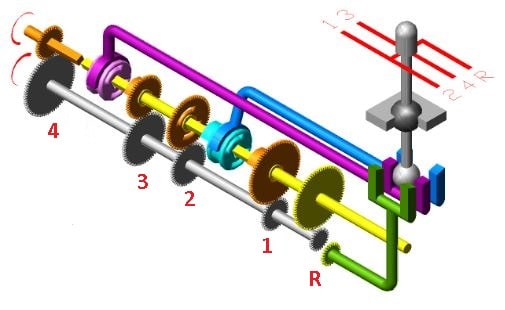
N – Neutral Gear
In neutral gear, the vehicle remains stationary and there is no coupling attachment in the transmission which means no power is transmitted.
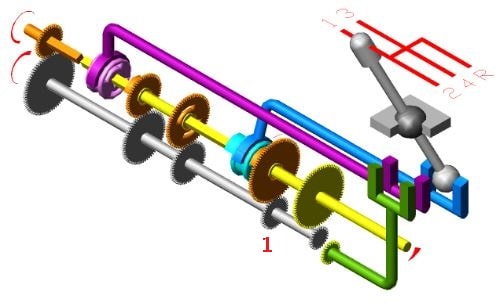
First Gear
A small gear is locked with the layshaft. Rotation is transmitted to the main shaft by a single gear of the input shaft and to the layshaft through a gear of either the first or two gear.
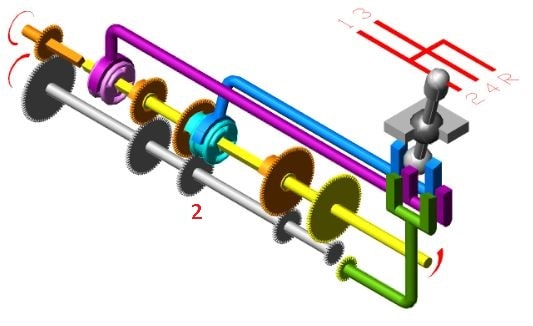
Second Gear
First gear speed is already allowing the car to accelerate, and it makes for a smoother shift to second gear.
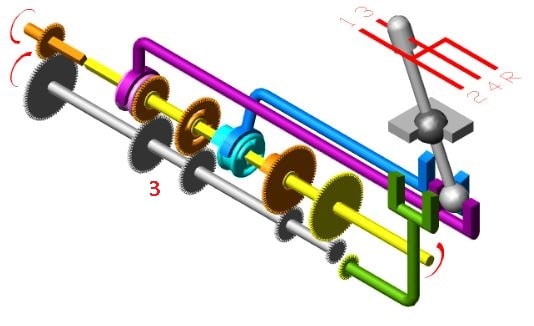
Third Gear
In the third gear, the forward speed increases more but the torque is reduced.
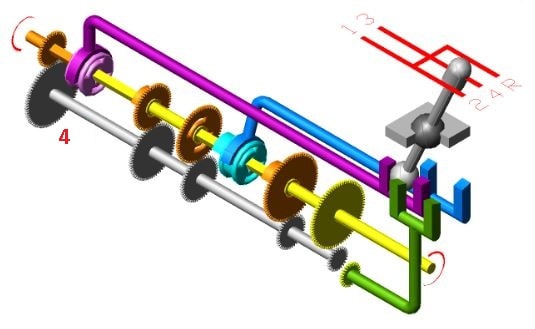
Fourth Gear
The fourth gear is direct drive. This means that the input shaft and main shaft are locked together to give a high amount of power to the engine.
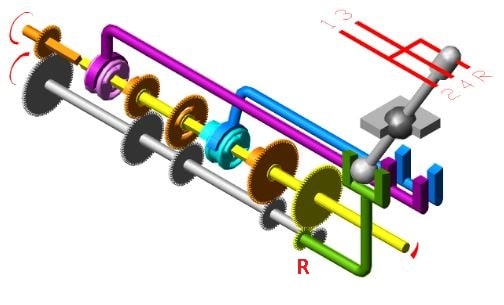
Reverse Gear
An idler gear is placed between the gears on the two shafts, causing the mainshaft to reverse direction.
Construction of Manual Transmission
If you’ve driven a car with a manual transmission, you know about the clutch pedal and gear shifter. The driver operates a manual transmission by using these two inputs.
In this system, the gearbox consists of three main shafts with continuously meshing gears of different sizes. The input shaft is connected to the engine by means of a clutch and the countershaft continuously meshes with the input shaft and consists of several gears.
Whereas the output shaft connects the countershaft to the driveshaft and probably to the wheels. In vehicles such as FWD and AWD, the output shaft is connected to the first transfer case and the reverse is usually on the fourth shaft to effect a change in direction.
Parts of Manual Transmission
- Transmission or Transfer case
- Input shaft
- Output shaft
- Layshaft
- Synchronizers
- Gears
- Stick shift
- Shift fork
- Bearing
- Extension Housing
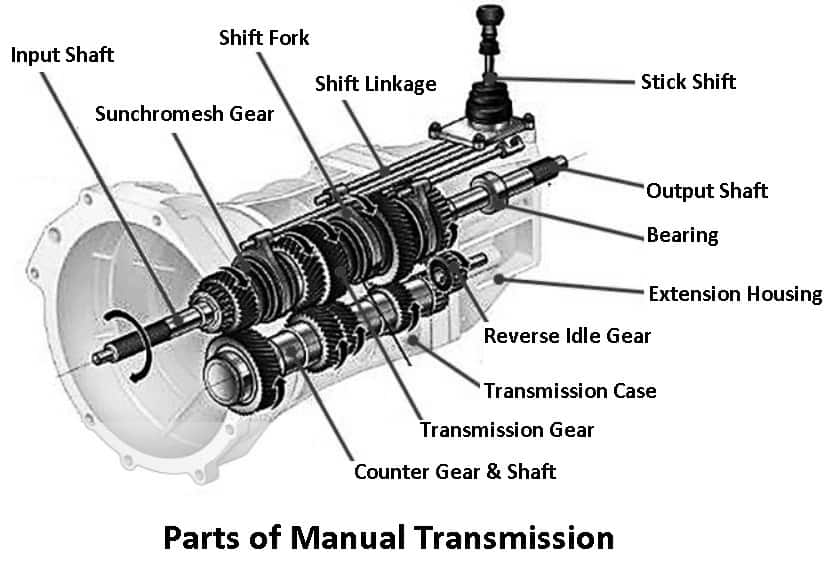
#1 Transmission or Transfer Case
It is part of the drivetrain that is used to transfer power from the transmission to the rear axles by using a drive shaft.
#2 Input Shaft
The input shaft of the transmission is connected to the layshaft, having gears on both shafts. Whenever the input shaft turns, the countershaft also rotates and is always in a fixed speed ratio.
#3 Output Shaft
The function of the output shaft is to send the power out of the transmission system to the engine. The output shaft gears are in mesh with the countershaft gear and rotate independently. It will rotate according to the power transferred by the layshaft gear.
#4 Countershaft
This is also known as countershaft. It rotates in the opposite direction to the input shaft. They spin whenever the engine is running and the clutch is engaged. Whenever a gear is selected by the driver they drive gear on the mainshaft.
#5 Synchronizers
Synchronizers facilitate engagement between the collar and gear to synchronize their motion. Plus, they help to adjust the shaft speed so that the gears align faster as you shift. Sometimes the speed can vary, so the synchronizer helps to avoid that happening.
#6 Gears
Basically, the manual transmission has three shafts with gears of different sizes. There are some large gears that have lots of teeth and some small gears which have few teeth.
The large gears generate extra torque, which helps in slowing the vehicle. Whereas smaller gears generate less torque, which helps the vehicle to travel at high speed.
#7 Stick Shift
It is located on the center console, the shift lever is connected to the transmission by a linkage and you can control it with your hand. With the shift lever, you can control and switch gears with ease. The function of the stick shift is to change gears manually as they accelerate and slow down a vehicle.
#8 Shift Fork
The selector fork is a type of gear that looks like a mechanical arm. The gear selector forks slide along the manual transmission’s layshaft. This permits the collars to move on the output shaft.
#9 Bearings
In a transmission system, the gears are in rotation and interlock to each other at all times with help of bearings. They also allow the input shaft and output shaft to rotate at different speeds.
#10 Extension Housing
The transmission has an extension housing that protects the output shaft at the rear of the transmission and also supports the bearings.
How Manual Transmission Works?
In a manual transmission, the driver has to select the appropriate gear by engaging or disengaging the clutch. As we said, It works on the principle of gear ratio. When a larger gear coincides with and drives a smaller gear, the smaller gear will spin faster than the larger gear.
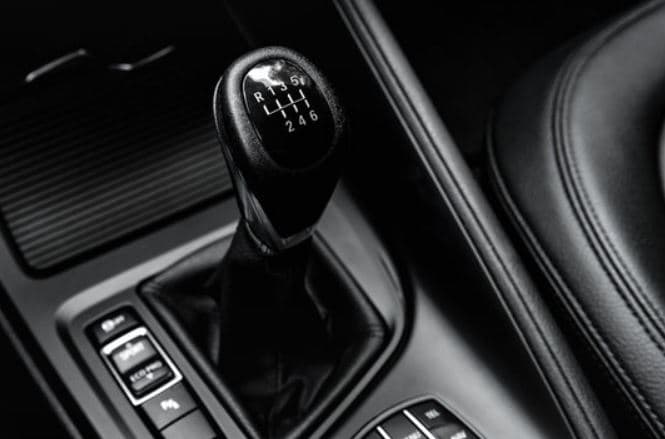
The larger the difference in gear size, the higher the gear ratio. In this, gears are mounted on shafts that rotate other gears. The gear shift selector drives the selection of gears, while the constant-mesh hypothetical connector and synchronizing ring ensure smooth working.
Starting with the first gear allows the engine to run at the optimum RPM to take the car from a steady state to a moving state. Once the car reaches the maximum optimum RPM range, the second gear is engaged.
Thus, the driver increases the speed and changes the gears until the desired speed is achieved. Maintaining the RPM range allows the engine to operate efficiently. The reverse turn is achieved by a three gear system and the synchronizer is kept idle.
This means that the transmission shaft must stop rotating before shifting to reverse gear. To stop the rotation of the transmission shaft without stopping the engine rotation requires disconnecting the clutch.
What is the H Pattern in Transmission?
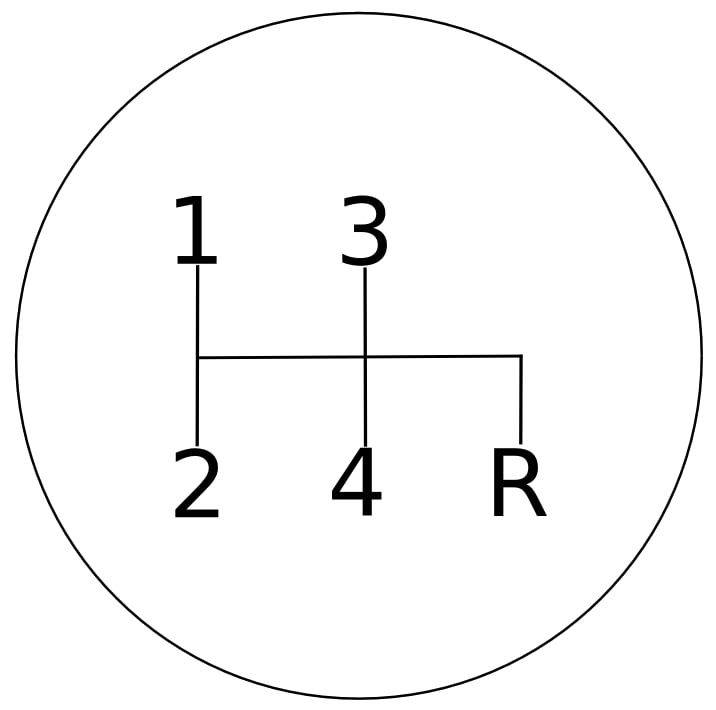
The H pattern is nothing but a design pattern of gears in a manual gearbox lever. In a car with a manual transmission, it allows the driver to move the shift lever back and forth to change gears according to the H pattern.
The top-left position of the shift lever indicates the first gear and the second gear is right straight down to it. To move to third gear, you need to shift up again to the right and up. Eventually, the fourth gear is in straight down to the third gear.
Types of Manual Transmission
- Sliding mesh transmission
- Constant mesh transmission
- Dual-clutch transmission
- Automatic transmission
- Preselector transmission
#1 Sliding Mesh transmission
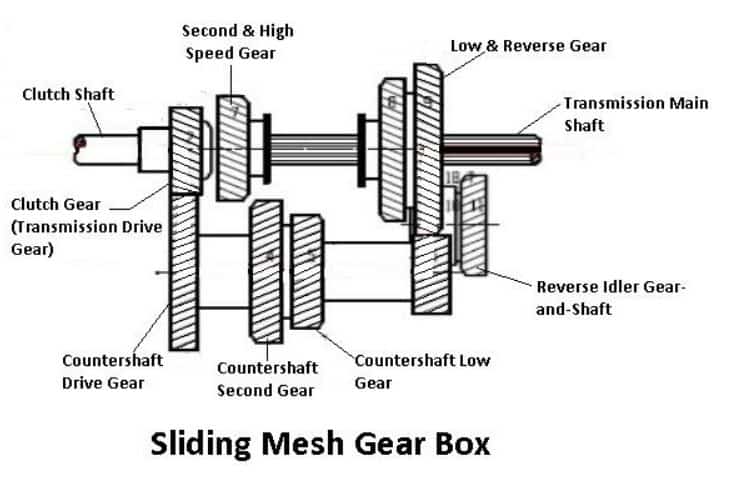
These transmissions are commonly seen in the old types of vehicles. When the transmission is in a neutral state, the only things that move are the main drive gear and cluster gear. To send power to the drive wheels, the clutch pedal must be pushed.
Moving the gear shift lever changes the position of the shift linkage and forks. It slides the gear along the main shaft directly over the cluster gear. Once these gears are engaged, the clutch is released. If you want to change gears again, you must disconnect the existing gear before shifting the new gears.
The sliding mesh transmission can provide relatively high efficiency compared to sliding mesh transmission because only one gear is in mesh, unlike the constant mesh transmission in which all gears are in mesh. Its design is simple which is one of its advantages.
#2 Constant-Mesh Transmission
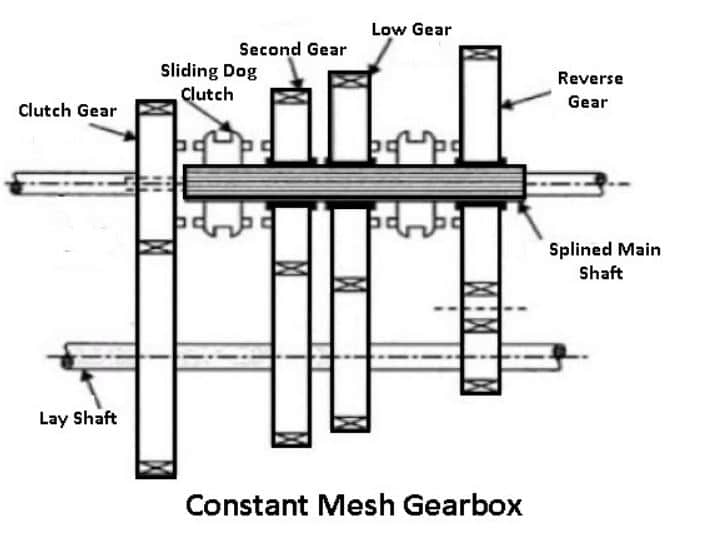
The continuous-mesh transmission maintains the motion of the gears, cluster gears, and main shaft gears as they are free to rotate around the main shaft. It has a dog clutch to lock these gears when required.
When the shift linkage moves, the teeth on the clutch and the main shaft gear lock onto each other and keep the gear stable. Synchronizers are used to prevent any collisions or grinding during transfer.
It uses helical gears to avoid vibrations and noises. They are highly beneficial due to their quiet operating capabilities. Since it uses two dog clutches, different gear ratios can be obtained.
#3 Dual-Clutch Transmission
A dual-clutch transmission is a modified version of a manual transmission with two sets of gears, each operated by a separate clutch. Basically, it uses two clutches which can be either wet or dry.
One clutch operates the even number of gears (2, 4, 6) while the other clutch operates the odd number of gears (1, 3, 5, and reverse gear). These types are very popular in older cars but are still found in modern race cars. DCTs offer better fuel economy than AMTs.
#4 Automatic Transmission
The automatic transmission (also known as AMT) is a manual transmission with a computer that controls the gear shifting and other major parts. Typically, it does not require any driver input to change gears under normal driving conditions.
Since it has axles and differentials in one combined assembly, thus it becomes a transaxle. It provides less effort for the driver and more features available to handle the car. Automatic transmission is commonly found in trucks.
#5 Preselector Transmisison
These are older models that were used in the 1930s. A preselector has a vacuum or hydraulic shift control and a planetary gear system to pre-select the gear ratio using a lever on the steering column.
The driver presses a foot pedal to shift gears that contact one of the gears already selected. As this happens, the rear gear stops while the new gear is engaged.
Maintenance of Manual Transmission
A manual gearbox is easier to use and maintain than an automatic gearbox, and it can travel hundreds of thousands of miles before needing repair. In fact, all a manual gearbox requires is the periodic gear oil change, which is typically required every 30,000 to 60,000 miles, depending on driving habits and environmental factors.
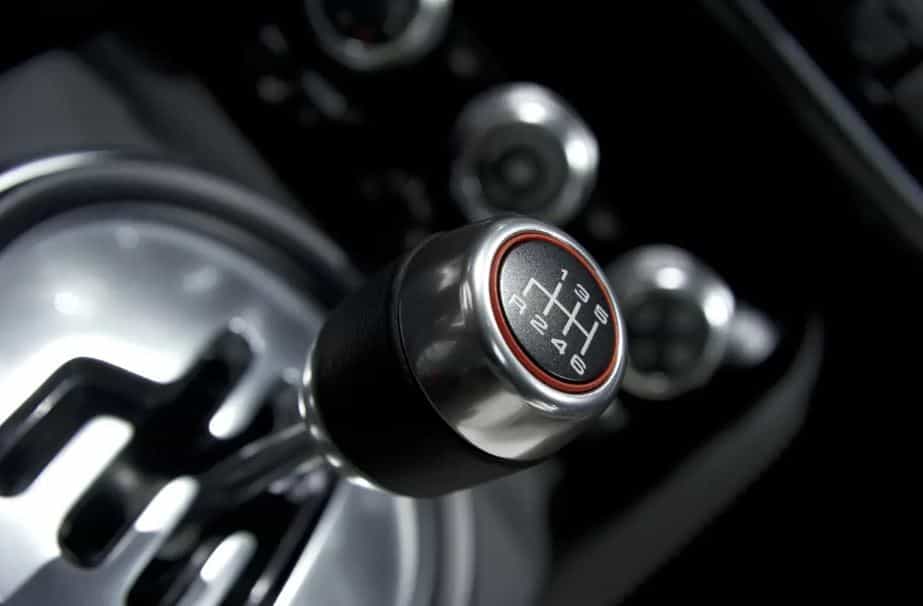 Image: gotodobbs.com
You may need to change the gear oil in your manual gearbox as frequently as every 15,000 miles if you drive a work truck, a race car or you simply drive aggressively. The gear oil doesn’t degrade in manual transmissions because of the lower temperature, but it does accumulate debris from the gears, bearings, and synchronizes.
Since manual transmissions lack filters, some of those particles merely float around, where they can cause wear by becoming stuck in other places.
The best way to extend the lifespan of your clutch and manual gearbox is to drive properly. Don’t ride the clutch unless you’re going downhill. As you press your foot on the clutch, the clutch releases your fingers, and the throwout bearing wears out. The clutch should be fully engaged when slowing down and released to downshift.
Riding the clutch only causes it to heat up and become worn out. Learn how to rev-match while downshifting to extend the lifespan of your clutch even further. It takes some getting used to, but by slightly increasing engine speed while engaging the clutch in the lower gear, the entire powertrain experiences less shift shock, and everything from the clutch to the driveline will last longer.
Advantages of Manual Transmission
- With fewer moving parts, a manual transmission can easily fit into your budget which means less expensive to purchase.
- These are easier to maintain because they are less complicated than automatics and less likely to go wrong.
- You can shift your car into neutral when you go down a hill. That means less power goes to the engine, and less fuel will burn. So better gas mileage can be achieved.
- Since manual transmissions have fewer moving parts, repair costs are significantly lower.
- By using engine oil, it wears out less quickly and doesn’t need to be changed frequently.
- If you have a vehicle with a manual transmission, you’ll get into fourth or fifth gear as quickly as possible and drive at higher speeds.
Disadvantages of Manual Transmission
- Manual transmission is rarely available in the market due to the widespread use of automatic vehicles.
- Learning to drive a vehicle with a manual transmission can be a difficult or challenging task.
- When you drive a car with a manual transmission, the clutch is likely to wear out, requiring a high repair cost to replace it.
- Driving up on hills can be risky and difficult if not prepared.
- In heavy-traffic situations, frequent stopping or starting and changing gears manually can make driving difficult.
Wrap Up
In short, vehicles with manual transmissions are considerably cheaper and more involved. Choosing a transmission system is quite a tricky task. However, if performance and driving experience matter to you, a manual transmission can be a perfect choice.
So for now, I hope I’ve covered everything about “manual transmission“. If you still have any doubts or questions on this topic, you can contact us or ask in the comments. If you like this article then please share it with your friends.
Want free PDFs direct to your inbox? Then subscribe to our newsletter.
Download PDF of this article
More from our site:
All images from Wikipedia.com [Under Creative Common Licenses]
About The Engineers Post team
Hey guys. Welcome to www.theengineerspost.com this blog is for all engineering students who are studying mechanical engineering, automobile engineering, and more. We provide in-depth guides and free PDFs on every engineering topic we cover.
14 thoughts on “Manual Transmission: Diagram, Parts, Working & Types [PDF]”
Am hambly requesting for the PDF file please
The PDF file has been sent to your inbox.
Am realy happy for the note . You guys should keep up the good work.
Please send me the PDF.I’m glad it was helpful for you. The PDF file has been sent to your inbox.
Great thanks to the author and the surponsor , I m learning CV very nice. Please never give up
Thanks for your feedback.
Send me the PDF notes about the Automotive Manual and Automatic Transmission
The PDF file has been sent to your inbox.
AM happy with that notes,I request for engine parts, and function also please
How Manual Transmissions Work: Explained in an Easy Way
If you are driving a stick shift transmission car, you will have a lot of questions floating in your mind like “How does a manual transmission work?”, “What is moving inside the manual transmission when moving the shifter?”. In this article, we will answer all questions related to manual transmission and give you a basic knowledge of every vital components in your car’s drivetrain. Let’s go!
What is Manual Transmission? (Shift Stick)
Before find out the answer for the question “How does a manual transmission work?“, you should understand about what manual transmission is. Manual transmission or a stick-shift or manual gearbox or a standard transmission is a type of transmission which the driver uses a stick to change gears literally. In the past, manual cars often had a dash-mounted shifter or a steering column but nowadays, in modern vehicles, the gear stick is mounted vertically in the center console and linked to the transmission through a linkage.
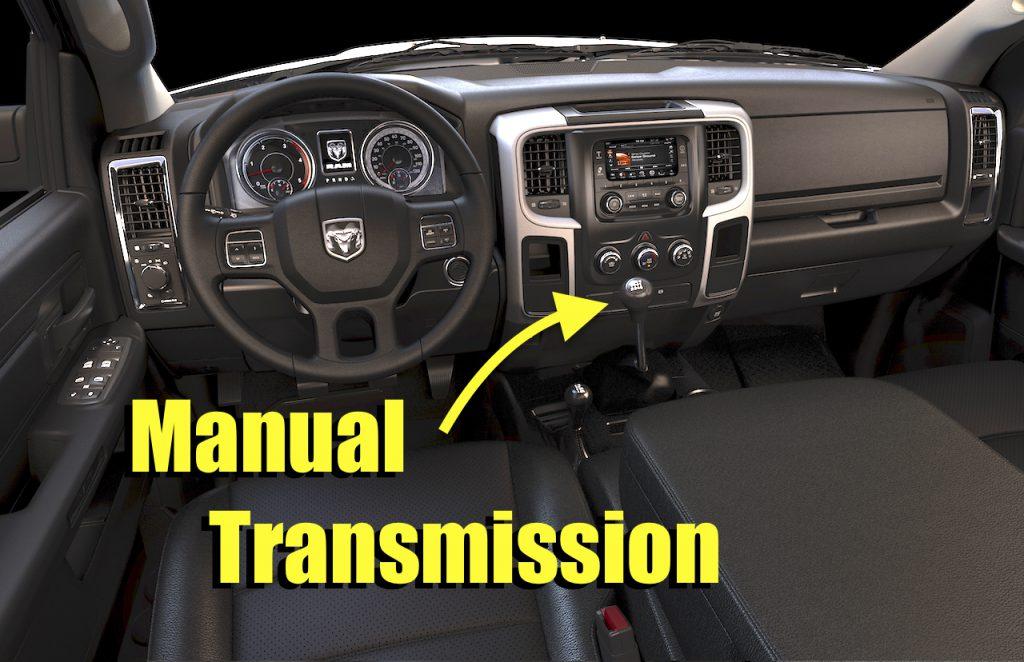
What is manual transmission?
Changing gears requires the clutch disc (which is located between the transmission and the engine) to be released through a 3rd pedal situated on the left of the brake. Then releasing the clutch, selecting the chosen gear and engaging the clutch again. From a standstill, the disc will be wear out early if the driver engage the clutch too slow. And if the driver engage the clutch too quick, it will make the engine to stall.
Studying how to drive a manual car takes more time than studying how to drive a automatic car, but it is funner and easier than it sounds. When driving a car with manual transmission, you will feel there is a connection between you and your car that is too hard to reproduce with an automatic transmission car. And another cool thing is that if you can operate a manual transmission, you will be able to run any type of vehicle.
Normally, a base-model vehicle is equipped with a 5-speed manual transmission. In more expensive vehicles, a 6-speed transmission is equipped instead.Various Parts of a Manual Gearbox
These brief descriptions about the gear and hardware of the gearbox will help you comprehend the complex way it works.
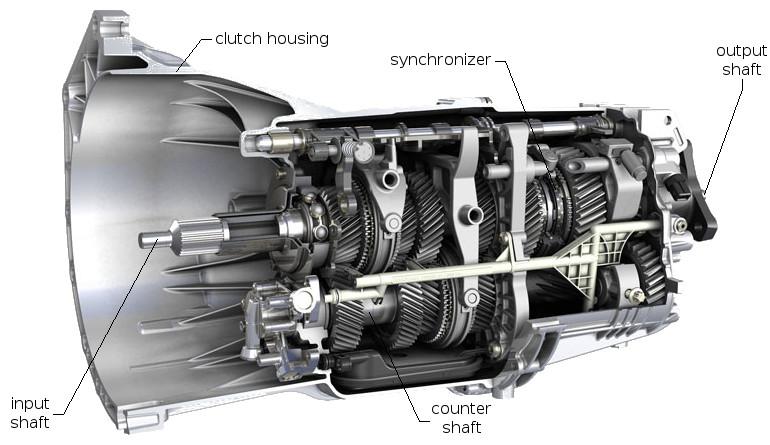
Various components of a manual gearbox. (photo credit: ZF)
1. Clutch and Clutch Pedal
Consisting of various small components, the clutch transmits engine torque to the transmission. The clutch pedal is a hydraulically controlled piece of gear that disengages the clutch when you depress it.
2. Flywheel
The circular mass sends engine torque to the clutch disc that interacts with a smooth surface of the wheel.
3. Selector Fork and Collar
It’s an arm-like piece of gear that helps in moving the collars along the output shaft. On the other hand, you can select different gears with the collar by locking it to a particular gear, resulting in passing the torque to the output shaft from the layshaft.
4. Synchronizers
These help the gear and the collar to engage with each other and match their speed in case if there’s a difference.
SEE MORE:
- Cars that are BETTER as Manual
- DON’T KILL Your Manual Car with these BAD Habits!
5. Layshaft and Output Shaft
The layshaft’s gears mesh with the output shaft’s gears when the first one receives the engine power.
6. Gears
You will find gears of various sizes in a manual gearbox. Larger ones have more teeth and provide more torque to curtail the car’s speed while the smaller ones produce less torque so that your vehicle can run at high speed.
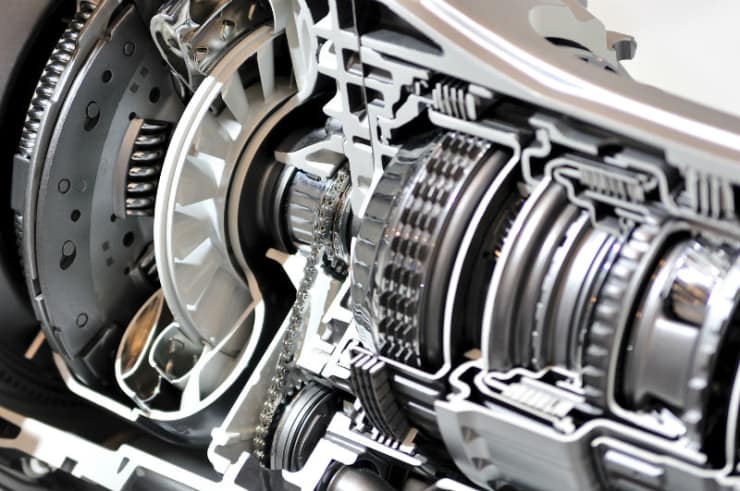
The working mechanism of a manual transmission. (photo source: Getty Images)
How Does A Manual Transmission Work?
So, with all your newfound knowledge, let’s find out what happens when you shift gears in your manual car and see how manual transmission works.
● You have to press down the clutch pedal to disengage the clutch before switching the vehicle’s key on. It will cut the power between the transmission and the input shaft of the engine. As a result, the engine will be alive without powering up the entire vehicle.
● Move the gearshift into first gear, which is located in the output shaft, so that the shifting fork advance towards the latter one. The first gear is connected to a layshaft gear. The layshaft, on the other hand, has a connection to the input shaft of the engine through another gear.
● There’s a synchronizer collar attached to the shifting fork. It helps the driving gear to transport power to the output shaft and sync up their speeds if there’s a difference. You put the vehicle in gear when this collar locks with the first gear, which is in a secure attachment to the output shaft.
● Now, put a slight pressure on the gas pedal and take the foot off the clutch. It will reconnect the engine with the gearbox. Then, the vehicle will start moving forward.
● Shift to the second gear after pushing the clutch to go faster. It will disconnect the power between the engine and the transmission gearbox. You just need to repeat this process to change the gear so that you can slow down or speed up the car.
Watch the video below to have a better knowledge about “How does a manual transmission work:
>> Looking for a quality cheap used car from Japan, click here <<
Hopefully through this article, you will get to know the answer of the question “How does a manual transmission work?”. If you have any question about manual transmission, stick shift transmission, feel free to leave us a comment below. And keep reading on us to get more car maintenance tips updated everyday.