What Is Collision Mitigation Braking System?
In today’s fast-paced world, safety on the road is more important than ever before. One of the most innovative technologies designed to keep drivers safe is the Collision Mitigation Braking System (CMBS).
This cutting-edge system uses advanced sensors and intelligent software to help drivers avoid collisions or reduce the severity of an impact. The system can prevent front-end collisions by alerting the driver, and even applying the brakes if necessary.
Think of CMBS as an extra set of eyes that never rest. The system is designed to quickly recognize and alert the driver to a decrease in the following distance, using two distinct warning methods, and applying the brakes when necessary.
This feature can assist even the most vigilant drivers in avoiding a front-end collision, as well as help prevent collisions with pedestrians.

Table of Contents
Understanding Collision Mitigation Braking System™ (CMBS™)
The CMBS™, or Collision Mitigation Braking System™, is a helpful feature that can assist you in situations where your vehicle may be on a collision course with either a vehicle or pedestrian in front of you.
This system can provide both visual and audible alerts to notify you of a potential collision and can reduce your vehicle’s speed to help minimize the severity of the impact if a collision is deemed unavoidable.
In the event that a potential collision with an oncoming vehicle is detected, the driver information interface will display a BRAKE message, the warning lights on the head-up display will flash, and a beep will sound, all to alert you of the potential danger.
The CMBS™ system is designed to activate in certain situations, such as when the speed difference between your vehicle and the one in front of you, whether it be another vehicle or a pedestrian, is about 3 mph (5 km/h) or greater and there is a possibility of a collision.
It will also activate when your vehicle’s speed is 62 mph (100 km/h) or lower and there is a chance of a collision with an oncoming vehicle or pedestrian detected in front of you.
What Is The Safety Benefit?

CMBS is a system that has been designed to help prevent rear-end collisions with stationary or moving vehicles. Studies have shown that driver distraction or lack of attention is a significant factor in the vast majority of rear-end collisions.
CMBS aims to warn drivers of an imminent collision from behind, both at low speeds typical of urban driving and at higher speeds typically found on rural roads and highways.
The most common types of injuries resulting from such collisions are to the cervical spine, thoracic soft tissue, and knees.
Honda estimates that if all cars were equipped with CMBS, approximately 19,000 accidents could be avoided and 153,000 could be mitigated annually by analyzing accident data in Germany and extrapolating it to the wider European community.
How Does CMBS Work?
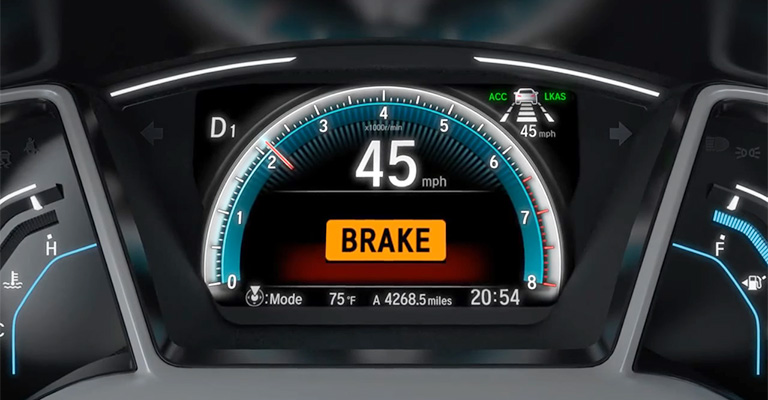
The CMBS system relies on a front-mounted camera and millimeter-wave radar to keep track of the traffic ahead.
If the system detects that the vehicle in front has come to a sudden halt or if there is a pedestrian in its path, it will alert the driver in three stages. However, depending on the circumstances, CMBS may not use all three stages.
Alert Stages
There are three stages of alert that the system uses to detect potential collisions. In certain situations, or if the CMBS settings are adjusted, the last stage may be activated before all three stages have been used.
Stage 1: Visual And Audible Warning

CMBS issues a visual and audible warning when the risk of collision is detected, prompting the driver to take corrective action (part of FCW).
Stage 2: Visual And Audible Warning, Light Brake Application
CMBS applies gentle brake pressure if the driver fails to take action and the distance from the object shortens despite the audible warnings and visual warnings.
Stage 3: Visual And Audible Warning, Strong Brake Application
A collision is imminent if the driver does not take action and CMBS continues audibly and visually alerting the driver and applying the brakes fully. To prepare for a possible collision, the e-pretensioners are also engaged.
Can You Turn Off Collision Mitigation Braking System?
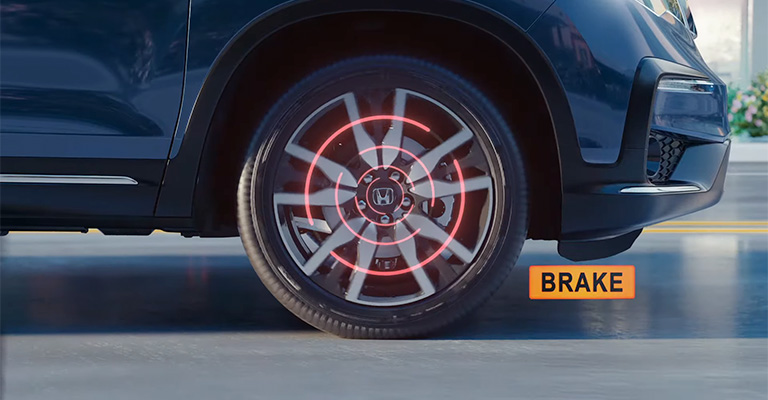
You can turn CMBS on or off by pressing the safety support switch and then using the left selector wheel to choose the CMBS symbol.
Once you have made your selection, a message will appear in the driver information interface. If CMBS is not active, the CMBS indicator will be visible.
You can also reset your CMBS too, here we talked on it, How to resert Honda CMBS
Operating Conditions and Limitations
- Some conditions may prevent CMBS from activating or detecting a vehicle. You can find a complete list of conditions in the owner’s manual of your vehicle.
- CMBS cameras are susceptible to malfunctioning when they receive scratches, nicks, and other damage to the windshield within their field of view.
- The CMBS camera’s field of vision should not be obstructed by any firm or objects applied to the windshield.
- Keeping the vehicle in a safe state and avoiding collisions are the driver’s responsibilities at all times.
- Weather, speed, and other factors will affect the accuracy of the system.
Which Honda Models Feature Honda Sensing® with CMBS™?
Honda Sensing® and Collision Mitigation Braking SystemTM are available on the following new Honda vehicles:
| Vehicle Model | Body Type | Standard Trim Levels |
|---|---|---|
| Honda Accord | Sedan | Standard on all trims |
| Honda Civic Coupe | Coupe | Standard on all trims |
| Honda Civic Hatchback | Hatchback | Standard on all trims |
| Honda Civic Sedan | Sedan | Standard on all trims |
| Honda Clarity Plug-In Hybrid | Sedan | Standard on all trims |
| Honda Fit | Subcompact | Standard on EX trim and above |
| Honda Insight Hybrid | Sedan | Standard on all trims |
| Honda CR-V | SUV | Standard on all trims |
| Honda HR-V | SUV | Standard on EX trim and above |
| Honda Passport | SUV | Standard on all trims |
| Honda Odyssey | Van | Standard on all trims |
| Honda Pilot | SUV | Standard on all trims |
| Honda Ridgeline | Pickup Truck | Standard on all trims |
How Do You Change The Honda CMBS Distance Setting?
You may want to adjust the distance setting if you want Honda’s CMBS to intervene in frontal collisions with other vehicles, pedestrians, cyclists, and other objects.
Changing your Collision Mitigation Braking System’s distance setting is as simple as following these steps:
- Make sure the vehicle is in PARK
- Select Settings from the home screen
- Choose vehicle
- Select the Driver Assist System Setup option
- You can choose the warning distance for forward collisions
- You can select Long, Normal, or Short
- To exit the menu, press Back
Final Words
Even though not every automotive collision can be avoided, wouldn’t it be nice to decrease your chances to the greatest extent possible? This intuitive driver’s assistance feature utilizes audio and visual alerts, as well as brake assistance to prevent frontal collisions.
About Richard Craver
I worked as Honda service technician for a long time. I am currently enjoying a second career in industrial manufacturing. I spent a few years in aviation manufacturing after 34 years in the Acura and Honda repair field.
I am using the same skill sets that I honed over the years in the automotive industry in an industry that not only expects, but demands quality workmanship and attention to detail. LinkedIn
Как работают электронные системы Honda

Очень часто на разных ресурсах встречаю вопросы о том, как работают Honda Sensing, активный круиз и прочие «новомодные» системы в Джейд. Для многих (кто пересел с Аккорда, Стрима, Цивика) это первый автомобиль с большим набором ассистентов, а информации о них не так много: мануалы и брошюры почти все на японском языке, а дилерских Хонд с таким оборудованием в стране единицы. В итоге народу просто неоткуда узнать об особенностях работы тех или иных кнопочек и индикаций на панели, поэтому даже сами владельцы Шаттлов и Джейдов зачастую не особо понимают, что умеет их автомобиль. Попробую кратко и без лишних технических подробностей описать их, т.к. на мой взгляд именно наличие таких систем выгодно отличает Джейд от многих других автомобилей из Японии. На 90% написанное будет справедливо и для Shuttle, StepWgn и других современных Хонд с системой Honda Sensing.
В основе большинства описываемых систем данные с радара (за эмблемой «H» на решетке радиатора) и камер (за лобовым стеклом в верхней его части). Следите за чистотой этих участков для того, чтобы техника правильно отрабатывала опасные ситуации.
 Камера и радар, определяющие объекты вокруг автомобиля
1. Honda SENSING [в базе для Hybrid X, опция для RS и Hybrid] включает в себя целый набор систем, кратко остановлюсь на каждой:
1.1 CMBS (Collision Mitigation Braking System, система предотвращения столкновений)
Как работает: анализирует обстановку впереди автомобиля, при наличии опасности сначала мигает на панели оранжевым индикатором, затем пищит, «тычет» в педаль газа, далее в случае невмешательства водителя применяет экстренное торможение. Отключается кнопкой справа от руля
 Кнопки справа на панели
Личный опыт: в целом система работает корректно, срабатывания (пищания, без торможений) иногда бывают на извилистой дороге как реакция на встречный автомобиль, если он в какой-то момент едет по направлению четко на тебя. Один раз было полное срабатывание на пешехода: ехал примерно 50 км/ч, светлое время суток, пешехода видел переходящего и выбрал траекторию, чтобы не пересечься с ним. Система сначала пикнула, я не тормозил (т.к. ситуация под контролем), Хонда решила взять всё в свои руки и резко притормозила (примерно до 20 км/ч).
1.2 Адаптивный круиз-контроль
Как работает: держит заданную скорость, если впереди оказывается другой автомобиль, тормозит примерно до 25 км/ч и далее отключается со звуковым сигналом. Активируется кнопками справа на руле, там же регулируется заданная скорость и дистанция до автомобиля.
Личный опыт: часто пользуюсь как на трассе, так и в городе, чтобы не собирать штрафы за небольшие отклонения от нештрафуемого порога. Очень удобно, что минимальная скорость 25, а не 40 км/ч, как на Тойоте – реже выключается при уплотнении движения.
1.3 LKAS (Lane Keeping Assist System, система помощи движению в полосе)
Как работает: когда может понять разметку, сообщает об этом индикаторами и далее может самостоятельно подруливать, удерживая автомобиль в полосе. Активируется кнопками справа на руле, работает только со включенным круизом, напоминает о себе и отключается, если перестаешь рулить сам (понимает это отсутствию вращения руля водителем).
Личный опыт: пользовался 3 раза, 1 раз – чтобы посмотреть самому и 2 раза – чтобы другим показать. Разметку видит не слишком хорошо, особенно если полосы широкие.

1.4 Система предотвращения съезда с дороги
Видит разметку (весьма неплохо, кстати) и предупреждает водителя вибрацией на руле в случае наезда на линии без включенного поворотника. Отключется кнопкой справа от руля.
Личный опыт: в целом довольно удобная и не досаждающая вещь, но только не для регионов с плохими дорогами: при объезде ям и ухабов с «цеплянием» соседних полос будет регулярно срабатывать.
1.5 Система предотвращения случайного начала движения
При остановке на D или движении до 10 км/ч, если впереди есть препятствие, не дает нажимать газ и предупреждает значком на передней панели.
Личный опыт: ни разу не было проблем с этим, срабатываний не чувствовал. хотя от некоторых владельцев Honda Shuttle слышал о том, что иногда мешает трогаться в пробках или на светофоре.
Еще Jade не дает трогаться с открытой дверью и не дает трогаться вниз с горы непристегнутому водителю. В «опасных» случаях переключает коробку в «паркинг». Недавно в автосервисе не мог перекатить машину, пока не пристегнулся ) Пока не понял, в какую систему это входит, но наблюдение такое есть. Кроме того, если отстегнуться и открыть дверь, мотор сразу заведется (даже если батарея заряжена), напоминая, что машина включена.
1.6 Сигнал о начале движения впереди стоящих ТС
Как работает: если остановился за стоящим ТС и потом оно тронулось – раздается сигнал и отображается машинка на панели.
Личный опыт: мега полезная вещь в глухих пробках и на светофорах, если отвлекся – то вместо гудка сзади слышишь вежливое напоминание от твоего авто. Полезней функцию придумать сложно.
1.7 Распознавание знаков
Как работает: считывает 4 вида японских дорожных знаков и выводит их на панель, 2 вида – ограничение скорости и «кирпич» – совпадают с российскими. Хотя знак видит заранее, но отображает на панели именно когда ты до него доехал физически.
Личный опыт: работает довольно четко (за исключением случаев, когда знак через несколько рядов справа), помогает не проворонить внезапные (40). Видит и справа и слева от дороги, но плохо распознает повернутые / кривые знаки. Не видит числа больше, чем 80, т.е. полностью их игнорирует, изредка принимая (90) за (80).

2. Система оповещения об экстренном торможении [входит в базовую комплектацию]
Как работает: при резком торможении на скорости более 60 км/ч зажигает аварийную сигнализацию вместе со стопами.
Личный опыт: пока не сталкивался.
3. Система помощи при старте на подъеме [входит в базовую комплектацию]
Как работает: отпускаешь тормоз на уклоне – автомобиль стоит на тормозе пока не нажмешь газ.
Личный опыт: вроде бы работает (по горам езжу мало, с троганием в гору испытывал проблемы только когда на Жигулях в автошколе учился).
4. Ассистент при езде задним ходом [идет комплектом с магнитолой Internavi]
Как работает: анализирует изображение с камеры заднего вида и показывает стрелками направление движения пешеходов / автомобилей, траектория движения которых потенциально пересекается с вашей.
Личный опыт: много ложных срабатываний, когда ты движешься, а неподвижный предмет в кадре (столбик, куст) который ты и так хорошо видишь, помечается «стрелочкой». Но в некоторых случаях все же замечает автомобили или коварных пешеходов за углом раньше, чем ты сам.
 Сам я так и не поймал на фото момент предупреждения. В случае опасности загораются оранжевые стрелки с той стороны, где обнаружена потенциальная помеха.
5. Система помощи при прохождении поворотов [только на RS комплектации]
Как работает: динамически перераспределяет крутящий момент между передними колесами для более уверенного прохождения поворотов.
Collision Mitigation Braking System™ (CMBS™) (Honda Sensing® feature)
CMBS™ is designed to assist drivers in avoiding a frontal collision—or reducing its effects if unavoidable.
The Collision Mitigation Braking System™ (CMBS™) 8 is one of the most sophisticated safety systems available.
- It incorporates the features of the Forward Collision Warning (FCW) 9 system.
- A part of the Honda Sensing suite of technologies, CMBS is designed to alert drivers of a potential collision via visual and audible alerts and help the driver take corrective actions.
- The system can even apply the brakes to help reduce the forces of a collision if the system determines one to be unavoidable.
- The system is designed to perform in three stages:
- STAGE ONE: If the system determines there is a risk of collision with a vehicle or pedestrian detected ahead, it will issue visual and audible alerts to the driver.
- STAGE TWO: If the risk of a collision increases and the driver takes no action, the system will continue the visual and audible alerts, and begin to apply light braking.
- STAGE THREE: If the system determines that a collision is unavoidable, it will continue the visual and audible alerts, and apply strong braking to help mitigate the forces of the collision.
Important Note:The CMBS system on the CR-V will not be able to apply enough braking force to prevent all collisions. CMBS also cannot detect all objects ahead; the driver must intervene in certain situations, and must always be attentive when using the system. Also, CMBS may not go through all three stages, and may automatically engage the final stage if the system deems it necessary.
SAFETY
Honda is committed to the safety of its customers—and everybody else on the road. To help keep all drivers safe, we have developed suites of features for both the Honda and Acura automotive brands to assist drivers in lowering the risk of collisions. Read on below to see exactly how we make vehicles that think.
Adaptive Cruise Control (ACC)
Conventional cruise control has always been welcome on long highway trips but is of little use on an urban driver’s daily commute. Available Adaptive Cruise Control (ACC) allows the driver to set a desired speed but also maintain a desired following interval to a vehicle detected ahead so you enjoy the benefits of cruise control in light traffic.*
Collision Mitigation Braking System™ (CMBS™)
To help reduce the likelihood or severity of a frontal impact, Honda developed the Collision Mitigation Braking System™ (CMBS™).
Powered by a combination of radar transmitter and forward-facing camera, the CMBS™ determines the distance and closing speed of detected objects that lie directly ahead. If the system determines there is a potential for a crash, it will alert the driver to take action via audible and visual warnings and, in some models, a light tug of the seat belt. If the driver does reduce speed or take other avoidance actions, the CMBS™ will begin light braking.
If the system senses that a frontal collision is unavoidable, and even if no prior alerts have been given or light braking applied, the CMBS™ will automatically apply strong braking to help reduce the impact velocity and collision force; in some models, the front seat belts also will be tightened to help ensure proper occupant positioning.*
Forward Collision Warning (FCW)
If momentarily distracted, a state-of-the-art warning system can alert the driver to a potentially dangerous situation ahead. The Forward Collision Warning (FCW) system—using both visual and audible warning—alerts the driver to a potential collision with a vehicle detected ahead.
FCW can detect vehicles directly in front of the vehicle. If the distance between the two vehicles is diminishing, the system compares the vehicles’ current speeds to determine if a collision may occur.
To alert the driver to apply the brakes, FCW issues a beeping sound and flashes an amber “Brake” message in the Multi-Information Display. To avoid unnecessary warnings, the FCW will not operate at speeds below 3 mph.*
Lane Keeping Assist System (LKAS)
Using a forward-facing camera mounted above the inside rear view mirror, the Lane Keeping Assist System (LKAS) works proactively to keep the vehicle centered in a detected lane.
If the LKAS system has been engaged and you start to drift away from the middle of the lane, it will gently apply steering torque and help guide the car back to the center of the lane.
The system will not steer the car indefinitely. If it senses no steering input from the driver for a certain period of time, the system presents a message instructing the driver to begin steering again.*
Road Departure Mitigation (RDM)
The Road Departure Mitigation system uses a camera to identify lane markers such as painted lane lines, Botts Dots and cat eye markers.
When the system detects the vehicle is about to leave the road or lane marked by solid lines, it warns the driver with visual and audible warnings; on some models, it will also tug the front seat belt.
If the driver fails to take action and the system determines the vehicle had crossed outside of the marked lane, it can apply moderate torque to the steering in an attempt to guide the vehicle back into its detected lane. If it determines that steering assistance will not suffice, it will apply braking to help keep the vehicle from leaving the roadway altogether.*